Track city council lobbyists by filing a local FOIA request
The federal Freedom of Information Act does not apply to your city council. Not one clause. Not one line.
Harrison Lockwood, Lead Columnist on Systemic Justice & Climate Action·Updated: June 28, 2026·10 min read
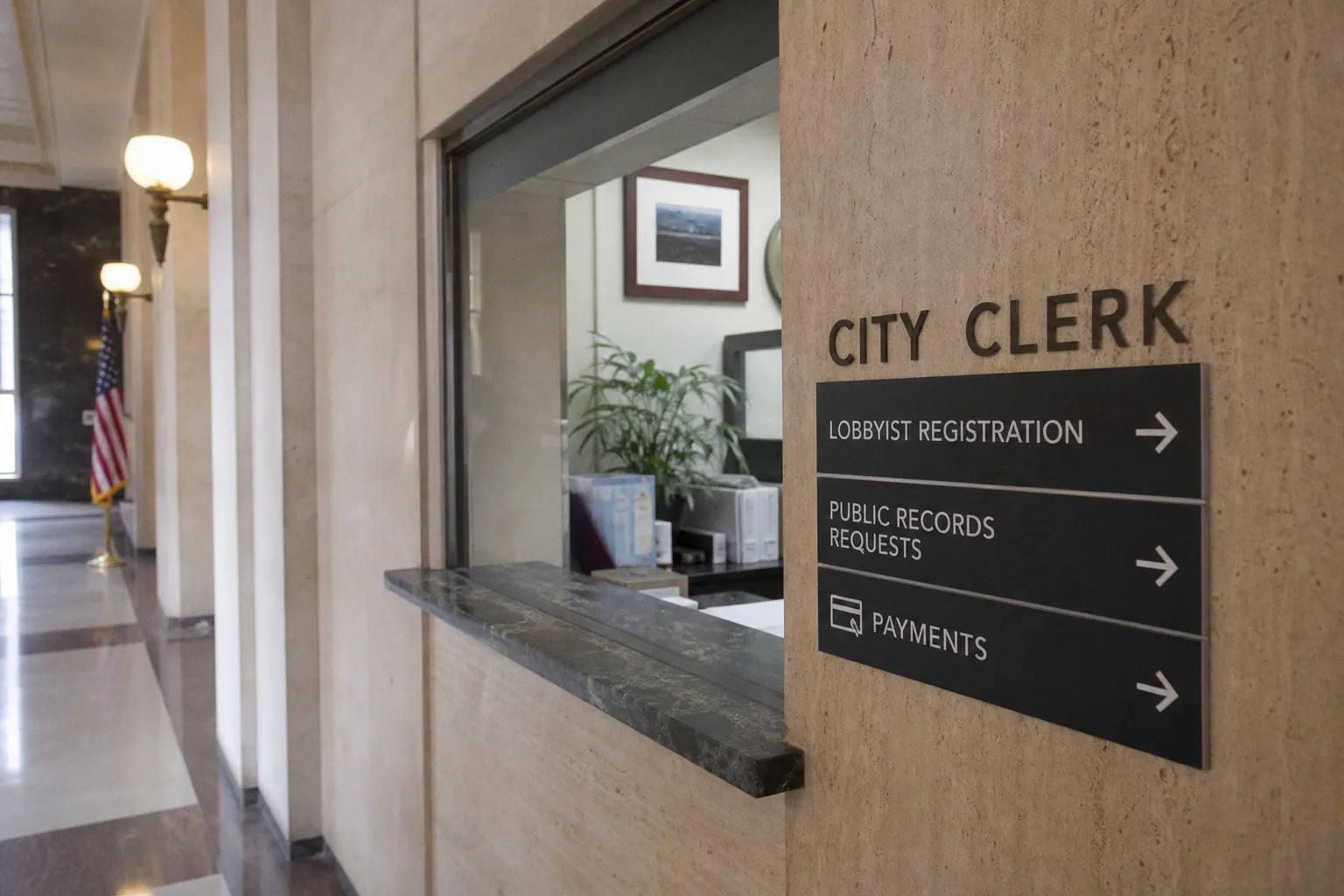
In 2024, the work of tracking who is whispering in the ear of your council member on a zoning variance, a police budget line, or a $40 million affordable housing contract means navigating that labyrinth yourself. There is no federal shortcut. There is no single portal. There is, however, a method — one that, applied with patience and precision, exposes the financial and procedural infrastructure of corporate influence at the exact level of government where most of our daily lives are actually governed. This is how we do it.
The 50-Law Labyrinth: Why Federal FOIA Stops at the City Line
The federal FOIA, enacted in 1966, was a landmark piece of transparency legislation. It pried open the inner workings of federal agencies. It was never written to reach the city council, the school board, the county commission, or the mayor's office. Local and state governments were carved out at the drafting stage. In their place, each state built its own regime: the California Public Records Act (CPRA), the New York Freedom of Information Law (FOIL), and 48 others — each with its own statute, its own exemptions, and its own bureaucratic personality.
The practical consequence is friction by design. If you want to know which lobbyists met privately with your council member before a vote on a municipal contract, you cannot file a federal request. You must identify the correct state law, locate the correct municipal office (usually the City Clerk or a local Ethics Commission), format the request in the jurisdiction's preferred language, and wait through the agency's specific response window — typically 5 to 20 business days for an initial determination.
The patchwork of state transparency laws is not a bug. It is the architecture of municipal capture — fifty different doors, each with a slightly different lock, each requiring a different key.
The fragmentation serves two functions. First, it imposes a cost — in time, in legal literacy, in persistence — that filters out casual requesters and burns out the rest. Second, it generates ambiguity that municipal counsel can exploit to delay, redact, or refuse disclosure under jurisdiction-specific exemptions: deliberative process, attorney-client privilege, ongoing investigation. The system is not broken. It is functioning exactly as designed. The lesson is to stop treating opacity as an exception and start treating it as the baseline condition against which we organize.
Where the Records Live: City Clerks, Ethics Boards, and the Quarterly Cadence
Lobbyists operating at the municipal level are generally required to register with the City Clerk or a local Ethics Board and to file periodic activity reports — most commonly on a quarterly basis. These filings are the spine of local disclosure. They contain the names of registered lobbyists, the clients they represent, the specific pieces of legislation or municipal contracts they are attempting to influence, and the compensation received for that work.
In larger cities — Los Angeles, Chicago, New York, Philadelphia — portions of these records are digitized and searchable online. The City of Los Angeles Ethics Commission, for instance, maintains a public lobbying dashboard. Partial digitization is not full transparency. The most valuable details — the narrative descriptions of lobbying activity, the specific compensation brackets (or exact figures, depending on the jurisdiction), and the cross-references between lobbyists and the officials they contacted — frequently live in PDFs, scanned forms, or paper filings that require a formal request to access in usable form.
Your first move is to identify the correct filing authority. In most municipalities, that is one of three offices:
- The City Clerk, which serves as the central records repository for council-related documents and meeting logs.
- A standalone Ethics Commission or Board, which often holds lobbyist-specific registration and activity filings.
- The City Attorney's office or a Compliance Department, in jurisdictions where lobbying disclosure is housed under legal counsel rather than an independent ethics body.
A request routed to the wrong office will trigger a referral — and reset your statutory clock. Confirm the filing authority before you send. Check the municipal website. Call the clerk's office. The thirty minutes you spend verifying the correct addressee will save you weeks of compounded delay.
Ex Parte Logs: Where the Real Decisions Are Made
Public hearings are performance. The substantive work — the negotiation, the pressure, the deal-cutting — increasingly occurs in private meetings between lobbyists and council members, outside the hearing room and outside the public record. These are called ex parte communications, and their documentation (or lack of it) is where municipal influence becomes visible to anyone willing to request the file.
Most state public records laws permit requests for ex parte communication logs. These logs, when properly maintained, record the date, the participants, the subject matter, and sometimes the duration of private meetings between registered lobbyists and elected officials. They do not typically contain transcripts. They do not contain verbatim quotes. They confirm that a meeting occurred and what it was about — which is itself a powerful evidentiary form. The footprint matters more than the transcript.
An ex parte log is not a transcript. It is a footprint. Six footprints, traced across a quarter, reveal the geography of influence more clearly than any speech from the dais.
Request the logs for a specific council member, for a defined date range, and for all meetings with registered lobbyists. Request them in a machine-readable format — CSV, searchable PDF, plain text. If the agency produces only scanned images, you have the right to demand the underlying records in a usable format, though some offices will charge for conversion. Frame this as a requirement, not a preference. The agency's default is to produce the least usable format that technically satisfies the statute. Your default is to push past it.
Reading the Compensation: How to Map the Transaction
Lobbyist disclosure forms include a compensation field — sometimes a precise dollar figure, more often a defined bracket. California's regime has historically required lobbyists to report compensation within statutory ranges; other jurisdictions require exact figures. Either way, the number is not the point. The point is what it correlates to.
A $15,000 quarterly payment from a real estate developer to a lobbyist who then logged six meetings with the council member chairing the zoning committee — three weeks before a vote on a height restriction exemption in the developer's target district — is not a coincidence. It is a transaction. The skill is in the assembly. Pull the compensation reports. Pull the ex parte logs. Pull the council voting records and contract award notices for the relevant period. Lay them side by side. The pattern, when present, is rarely subtle. It is the market functioning as designed.
| Document | What it shows | Where to get it |
|---|---|---|
| Lobbyist registration | Who is lobbying, for whom, on what issue | City Clerk / Ethics Commission |
| Quarterly activity report | Specific contacts, subject matter, compensation bracket | City Clerk / Ethics Commission |
| Ex parte communication log | Private meetings between lobbyists and officials | City Clerk (formal request) |
| Council voting record | Outcome on the targeted legislation or contract | City Clerk / Council website |
| Contract award notice | Which firm received the municipal contract | Procurement office / City Clerk |
The table is not exhaustive. It is a starting grid. Every cell in that grid is a public record, accessible through a state-specific request, once you identify the correct office and the correct statute.
When compensation, access, and outcome align, you are not looking at corruption. You are looking at the market functioning exactly as it was designed to.
This is the material reality of municipal governance: not every act of influence is illegal. Most of it is perfectly legal. The leverage is structural. The information asymmetry is the product. Your task is not to find a smoking gun. Your task is to make the asymmetry legible — to render the routine visible.
The Toll: Timelines, Fees, and the Gatekeeping Function
State laws mandate response windows — typically 5 to 20 business days for an initial determination. That clock starts when the agency receives the request and confirms it is complete. Vague requests reset the clock. Requests that require the agency to search across multiple departments without a clear scope are routinely returned as "overbroad" and refiled. Narrow your request. Name the records. Name the date range. Name the officeholder. The more specific you are, the harder it is for the agency to claim the request requires "search and segregation" labor that triggers additional fees.
Fees are the second gate. Common per-page charges for physical copies range from $0.10 to $0.50. More insidiously, agencies often charge for the staff time required to locate, review, and redact responsive documents — the so-called "search and segregation" cost. Rates vary by jurisdiction and are sometimes negotiable. Electronic records are frequently provided at no cost. Always request electronic delivery first. Always invoke the public interest waiver if your jurisdiction provides one — most state laws do, and many local journalists, researchers, and nonprofit organizations qualify as a matter of course.
When an agency misses its statutory window, the remedy is usually a complaint to the state attorney general or to a dedicated public records ombudsman. Build that escalation into your timeline from the start. The law is a tool; it works only when you use it against the gatekeeper who has stalled.
The Discipline of Seeing the Structure
Transparency is not a document you file once and forget. It is a practice — recurring, adversarial, and cumulative. The quarterly rhythm of lobbyist disclosure is not arbitrary. It is the cadence at which corporate influence declares itself. If you commit to requesting, reviewing, and publishing those filings every quarter — for your council, your school board, your county commission — you will accumulate within two years a dataset that no campaign finance portal can match. You will see which firms are persistent. Which officials are accessible. Which contracts move when the ex parte logs light up.
The discipline of mapping who funds which council vote is the same discipline we apply to any institution claiming public utility. The method is fundamentally about holding a mirror up to the process, forcing the internal mechanics of local deal-making into a public forum. It is not about finding one corrupt actor, but about documenting a system that normalizes access-for-cash as routine municipal business. The data, once assembled, tells a story that no single lobbyist's registration or quarterly report can tell on its own. It reveals the network.
This is not optimism. It is structure. The information exists. The laws, uneven as they are, provide access. The cost is patience, precision, and the refusal to accept that municipal governance is too local, too technical, or too boring to map. It is the level of government where extraction is least visible and most total. The work of pulling it into the light is not glamorous. It is the work. And it is the only counter-leverage we have against a system architected to keep us out of the room where the decisions are made.