Block local zoning variances using community land trust bylaws
A zoning variance can move faster than a neighborhood meeting. In many municipalities, the public notice window runs only 15 to 30 days.
Harrison Lockwood, Lead Columnist on Systemic Justice & Climate Action·Updated: June 30, 2026·17 min read
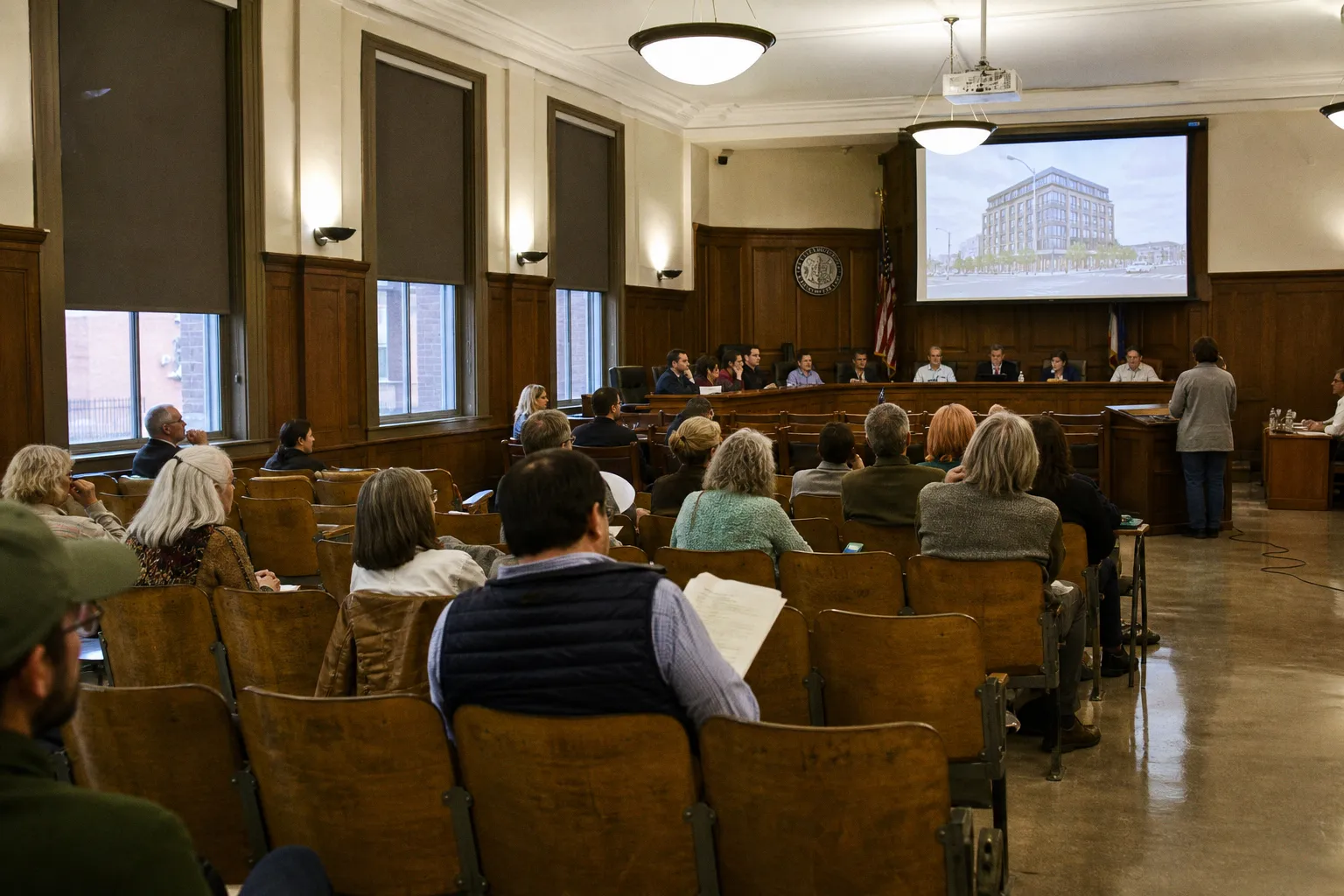
That compressed timeline is not an accident. It is part of the machinery. Developers do not need to "win the community" when they can win procedure. They need a missed notice, a thin hearing record, a few sympathetic officials, and a variance dressed up as inevitability. Community land trusts, when they operate as more than affordable-housing nonprofits, can interrupt that machinery. Not by pretending they hold a magic veto. They do not. But by using bylaws, ground leases, land-use restrictions, legal standing, and organized membership to make the variance harder to grant, harder to justify, and harder to defend.
If you are asking how to check block local zoning variances using community land trust structures, start by dropping the fantasy of a single silver bullet. The leverage comes from accumulation: property rights, documents, testimony, evidence, residents, procedural timing, and a board forced to confront the actual material conditions on the ground.
Establishing legal standing as an interested party in zoning disputes
Most zoning boards do not care that a developer's project feels extractive. They care whether the objector belongs in the room as more than background noise. That is why the community land trust model matters. A CLT is not merely a petition list with a logo. It can be a landowner, a lessor, a covenant holder, and an institution with a recorded mission tied to permanent affordability.
In many jurisdictions, parties can participate in zoning board hearings as "interested parties" or "aggrieved persons" if a proposed variance threatens their property values, use of land, or legally protected interests. That standard varies locally, and nobody should pretend otherwise. But a CLT has a stronger footing than an unaffiliated resident group because it can point to specific parcels, specific ground leases, specific affordability covenants, and specific land-use obligations.
This is where bylaws matter, though not in the magical way some activists want them to matter. Bylaws do not override municipal zoning ordinances. A board will not deny a variance because a CLT's internal governance document says "we oppose displacement." But bylaws can establish the trust's purpose, member authority, decision-making process, and obligation to defend community-controlled land. They show that intervention is not a hobby. It is part of the organization's mandate.
A serious CLT should be able to walk into a zoning hearing with:
- Its articles of incorporation and bylaws, showing a mission of permanent affordability, anti-displacement, stewardship, or community-led land use.
- Ground leases for trust-owned homes, commercial spaces, gardens, or mixed-use parcels that may be affected by the variance.
- Affordability covenants, often designed to run for 99 years, demonstrating long-term public benefit and restricted use.
- Maps showing proximity between the proposed variance and CLT properties.
- Member resolutions or board minutes authorizing opposition or conditional support.
- Evidence of how the variance would affect access, sunlight, stormwater, parking, rents, neighborhood-serving commerce, or the trust's ability to steward land.
The point is not to drown the zoning board in paper. The point is to force the board to treat the CLT as an institution with legally recognizable interests. Developers prefer the room divided into isolated homeowners and renters. A CLT changes the geometry. It aggregates interests. It turns diffuse anxiety into organized standing.
A community land trust does not beat a variance by being morally correct. It beats one by making the board's approval legally and politically expensive.
That distinction matters because the development lobby thrives on symbolic consultation. They will attend listening sessions. They will nod through "community feedback." They will produce renderings with trees and children and a coffee shop nobody in the neighborhood can afford. Then they will return to the board and ask for relief from the rules everyone else must live under. A CLT has to refuse that script and build a record that can survive beyond the hearing room.
Deconstructing the hardship argument: challenging developer claims
Variance law usually turns on hardship. Not inconvenience. Not reduced profit. Not "we would prefer twelve stories instead of six." A legitimate hardship generally must be unique to the land, not self-created by the owner, and not merely financial disappointment dressed in technical language.
This is the crack in the wall.
Developers often buy parcels knowing the zoning limits, then claim those same limits create hardship. They overpay for land based on speculative upzoning, then insist the public must rescue their pro forma. They subdivide, assemble, neglect, or design themselves into constraint, then ask the board to call that constraint an emergency. It is not an emergency. It is a business model.
A CLT can attack this directly. Not with slogans, but with evidence. If the applicant claims the parcel cannot be reasonably used under existing zoning, the trust can show comparable nearby parcels operating under the same rules. If the applicant claims a dimensional variance is necessary, the trust can bring alternative site plans or expert testimony showing a code-compliant design. If the developer claims community benefit, the trust can compare that claim against the loss of affordability, public space, or neighborhood-serving land use.
A useful opposition record should separate developer discomfort from legal hardship:
| Developer claim | CLT counter-evidence | Why it matters |
|---|---|---|
| "The site cannot be developed under current zoning." | Examples of similar parcels developed without variances; alternative massing studies; planning records. | Shows the hardship may not be unique to the land. |
| "The variance is needed for financial feasibility." | Purchase price history, speculative acquisition timeline, market comparables. | Financial preference is not the same as land-based hardship. |
| "The project provides community benefit." | Loss of affordable units, pressure on CLT parcels, displacement data, weak affordability terms. | Forces the board to weigh actual material outcomes, not branding. |
| "The condition is pre-existing." | Evidence the owner created or worsened the condition through demolition, neglect, lot merger, or design choices. | Self-created hardship is a classic basis for denial. |
| "There is no neighborhood opposition." | CLT member resolutions, resident testimony, petitions, letters from affected leaseholders. | Breaks the manufactured consensus developers rely on. |
The CLT's bylaws help here because they define what "community-aligned land use" means within the organization. If the trust's governing documents require permanent affordability, resident control, ecological stewardship, or anti-displacement review, then the board hears opposition from an entity whose mission is specific and durable. That is harder to dismiss than generic "not in my backyard" panic.
And yes, developers will try to smear this as obstruction. Let them. The charge collapses under scrutiny. The applicant is the one seeking an exception. The applicant is the one asking the public to bend the rules. The applicant is the one claiming hardship after entering the market with eyes open. A CLT does not need to apologize for asking the state to enforce its own land-use standards.
Leveraging 99-year affordability covenants to influence land-use decisions
A CLT's bylaws create the political skeleton: who votes, who governs, how decisions get made, what mission binds the organization. But the ground lease is where the trust often gains sharper land-use leverage. Ground leases can include restrictions on resale, occupancy, affordability, maintenance, commercial use, and sometimes broader land-use expectations. They can also demonstrate that the trust has long-term obligations to residents and to the surrounding community.
That matters in variance disputes because zoning boards often weigh neighborhood character, land-use plans, and impacts on surrounding properties. A trust with 99-year affordability covenants can credibly argue that a proposed variance does not merely inconvenience today's residents. It threatens a long-term affordability structure built to resist exactly this kind of extraction.
The 99-year term is not decorative. It is a political time horizon written into property law. Speculators think in exit cycles. CLTs think in generations, or they are not doing the job.
A variance that enables luxury density next to CLT homes may raise land pressure. A commercial variance may shift a corridor away from neighborhood-serving use toward higher-rent retail. A parking or setback variance may impose real burdens on residents who already absorb the costs of austerity: poor transit, undermaintained infrastructure, heat islands, stormwater problems, and public services cut thin. These are not aesthetic complaints. They are distributive conflicts.
A trust can use its governing documents to show consistency between its internal mission and its external objection:
1. The bylaws establish the duty. The CLT exists to preserve affordability, prevent displacement, and steward land for community benefit.
2. The ground leases establish the relationship. The trust has enforceable, long-term obligations to leaseholders and residents.
3. The covenants establish duration. The affordability commitment often stretches across 99 years, far beyond an election cycle or a developer's holding period.
4. The variance record establishes the threat. The proposed exception would undermine the trust's land-use commitments or burden its properties.
5. The hearing testimony connects the pieces. Residents and board members explain how the variance conflicts with the trust's mission and the municipality's own planning standards.
This is not glamorous work. It is document work, map work, hearing work, coalition work. That is why it scares professionalized extraction. It cannot be neutralized by a ribbon-cutting ceremony.
The developer's leverage is speed. The community land trust's leverage is permanence.
The mistake is treating bylaws as a protest sign. They are not. They are an operating system. If the CLT's bylaws give residents only symbolic power, the organization will enter the zoning fight weak. If they require real member approval for major land-use positions, create committees with authority to review nearby development, and mandate anti-displacement criteria, the trust can act quickly without inventing procedure under pressure.
Consider how this plays out across different CLT scales. A small trust holding a dozen scattered-site homes can use its ground leases to argue that a nearby variance threatens affordable homeownership within a defined radius. A larger trust managing commercial properties, community gardens, and mixed-use buildings can assemble a broader evidentiary record showing how one exception reshapes an entire corridor. The principle is the same, but the strategic vocabulary expands with the trust's portfolio.
The covenants themselves are worth studying. Many CLTs use resale formulas that cap owner equity in exchange for permanent affordability. Others restrict commercial tenants to neighborhood-serving businesses, or require green building standards, or mandate accessibility features. Each of these restrictions represents a commitment the municipality's own planning apparatus may value—affordability, sustainability, accessibility, local commerce—and each becomes an argument that a variance threatening those commitments deserves heightened scrutiny.
Mobilizing the CLT membership for high-impact public hearing testimony
Zoning boards have heard emotional opposition before. They know how to sit through it, thank everyone for their comments, and approve the variance anyway. Passion matters, but unstructured passion lets officials pretend they heard concerns without confronting evidence.
A CLT should choreograph testimony around the legal criteria. That word—choreograph—will annoy people who think authenticity requires spontaneity. Fine. Developers choreograph everything. Their attorneys allocate arguments. Their engineers answer technical questions. Their consultants frame the narrative. If residents walk in uncoordinated, they are not more authentic. They are easier to defeat.
A high-impact hearing presence usually includes several distinct roles:
1. The standing witness. A CLT officer or attorney explains the trust's ownership, mission, bylaws, ground leases, and proximity to the proposed variance.
2. The resident witness. A leaseholder or nearby resident describes concrete impacts: affordability pressure, access, flooding, traffic danger, loss of light, or disruption to community use.
3. The planning witness. A planner, architect, or trained volunteer compares the request to the local variance criteria and comprehensive plan.
4. The financial witness. Someone addresses whether the hardship is self-created, tied to speculative purchase price, or merely a demand for higher return.
5. The coalition witness. A neighborhood group, tenant union, mutual aid network, faith institution, or small business alliance shows that opposition extends beyond one parcel.
6. The closer. A disciplined speaker asks for the specific outcome: denial, continuance pending more evidence, conditions, or a narrower variance.
Notice what is absent: a parade of people repeating the same sentence. Numbers help, but repetition without structure can fatigue the board and blur the record. A well-organized CLT turns twenty voices into a coherent case rather than twenty variations of "I don't like this."
Each witness should occupy a different evidentiary lane. The standing witness handles the legal and institutional foundation. The resident witness grounds the argument in lived experience and material harm. The planning witness provides technical credibility. The financial witness attacks the hardship claim at its root. The coalition witness expands the political frame. The closer ties everything to the decision the board must make.
Testimony without structure is catharsis. Testimony with structure is power.
There is a practical discipline behind this. Before the hearing, the CLT should distribute briefing packets to each speaker, summarizing the legal criteria, the key counter-arguments, and the specific points each person will cover. Time limits vary by jurisdiction, but most boards allow three to five minutes per speaker. Every second spent restating what the previous speaker said is a second wasted. Every second spent introducing a new piece of evidence or a new angle of attack is a second invested.
This also means the CLT needs a hearing preparation process. Not a last-minute phone tree. A real process: identify the application, analyze the request, research the applicant, assign witnesses, draft testimony, rehearse under time pressure, and designate someone to submit written materials for the record after oral testimony ends. Boards do not remember everything said in the room. The written record is the archive. It is what survives appeal.
The CLT's bylaws can support this work if they include provisions for member participation in land-use decisions. Some trusts require membership votes before taking public positions on adjacent development. Others authorize standing committees to prepare hearing strategy. The internal governance structure does not just organize the trust. It legitimizes its presence in public proceedings.
There is a class dimension here that polite planning language often conceals. Wealthy neighborhoods often have lawyers on speed dial, retirees with time for 2 p.m. hearings, and civic associations fluent in procedural obstruction. Working-class neighborhoods get told to celebrate "growth" while absorbing the displacement risk. CLTs can redistribute procedural capacity. They can turn zoning literacy into shared infrastructure rather than private advantage.
That includes training younger organizers. Students and early-career planners often want to fight displacement but get funneled into credential pipelines that teach them to manage inequity rather than challenge it. Political education happens in the rooms where land-use decisions are made and contested, where residents learn to read an application, decode a hardship claim, and testify under oath with precision. A CLT that runs regular internal workshops on variance procedure is doing more for civic capacity than most city-sponsored "engagement" portals ever will.
Strategic monitoring: tracking variance applications before the public notice period
The public notice period is usually too short for first principles. If the CLT begins organizing only after the orange sign appears on a fence, it has already donated time to the applicant. Developers track parcels, board calendars, pre-application meetings, and political signals. Communities must do the same.
A competent CLT should maintain a variance monitoring routine. Not because bureaucracy is thrilling. Because power hides in calendars.
The routine can be simple:
- Assign one committee or staff member to check zoning board agendas weekly.
- Track parcels within a defined radius of CLT-owned or CLT-stewarded land.
- Maintain a shared map of pending applications, ownership entities, requested variances, and hearing dates.
- Pull prior approvals for the same applicant or related LLCs.
- Watch for demolition permits, lot consolidations, tax sales, and rezoning petitions before a variance request appears.
- Prepare template testimony tied to the local variance criteria, not generic outrage.
- Keep a roster of members who can attend hearings on short notice, including renters, homeowners, elders, small business owners, and youth organizers.
This is where digital activism helps, but only if it serves the ground game. A spreadsheet does not testify. A mass email does not cross-examine a hardship claim. A social post does not create legal standing. Digital tools should compress coordination time so residents can spend their energy on the record that matters.
Early detection changes the entire contest. When a CLT spots a variance application before it hits public notice, the trust can research the applicant's history, review comparable cases, consult a land-use attorney, prepare counter-evidence, and begin organizing testimony before the clock starts. That head start is not a luxury. It is the difference between a reactive protest and a strategic intervention.
Some CLTs partner with local planning students, legal clinics, or pro bono attorneys to build monitoring capacity. Others train their own members to read zoning maps, track ownership transfers through property records, and attend pre-application meetings that developers hope nobody notices. The specifics depend on local capacity, but the principle is consistent: surveillance of the development pipeline is a core function of community-controlled land stewardship.
A CLT that wants to move from reactive protest to durable power should run regular variance drills. Take an old application. Identify the requested relief. Find the hardship claim. Draft questions. Assign roles. Practice testimony under three minutes. Decide what evidence belongs in the record. Then do it again. The first time should not be on the night a developer's land-use attorney arrives with a polished slide deck and a smirk.
The fight is cumulative, not cinematic
No single variance hearing will save a neighborhood. No single bylaw clause will stop a developer with capital and counsel. The work is unglamorous, iterative, and often invisible until the moment it is needed. But accumulation is real. A trust that monitors applications, trains members, maintains legal documents, builds coalitions, and shows up with evidence does not just win occasional denials. It changes the political calculus for every applicant who comes after.
Developers talk to each other. Attorneys share intelligence about which boards take hardship claims seriously, which neighborhoods organize fast, which trusts have legal capacity and which do not. A CLT that builds a record of disciplined, evidence-based opposition sends a signal through the network: this community is not cheap to override.
The goal is not to win every hearing. The goal is to make extraction expensive enough that some applicants never apply.
That is not cynicism. It is structural analysis. Zoning boards respond to political cost. When opposition is organized, documented, and legally grounded, boards find reasons to deny or condition variances that would otherwise sail through. When opposition is scattered, emotional, and procedurally illiterate, boards find reasons to approve. The content of the law does not change. The political environment around its application does.
A community land trust, properly governed and strategically deployed, reshapes that environment. Its bylaws provide the mandate. Its ground leases provide the standing. Its covenants provide the time horizon. Its members provide the testimony. Its monitoring provides the early warning. None of these elements is sufficient alone. Together, they are the architecture of refusal—the machinery that forces a board to treat community-controlled land as something more than a speed bump on the way to a pro forma.
That is how to check block local zoning variances using community land trust structures. Not through a single clause or a single hearing, but through the patient, unglamorous accumulation of rights, documents, people, and time.