Boycott union-busting cafes using Portland's activist map
Portland baristas filed more union petitions in the last four years than in the previous two decades combined.
Harrison Lockwood, Lead Columnist on Systemic Justice & Climate Action·Updated: June 10, 2026·9 min read
This is a field manual for closing that gap. We will trace how Portland's labor maps evolved, what union-busting actually looks like inside a coffee shop, why the data is fragmented and how to navigate it, and how to convert digital awareness into action that does not collapse into rumor.
The Digital Frontline: How Portland's Labor Maps Evolved
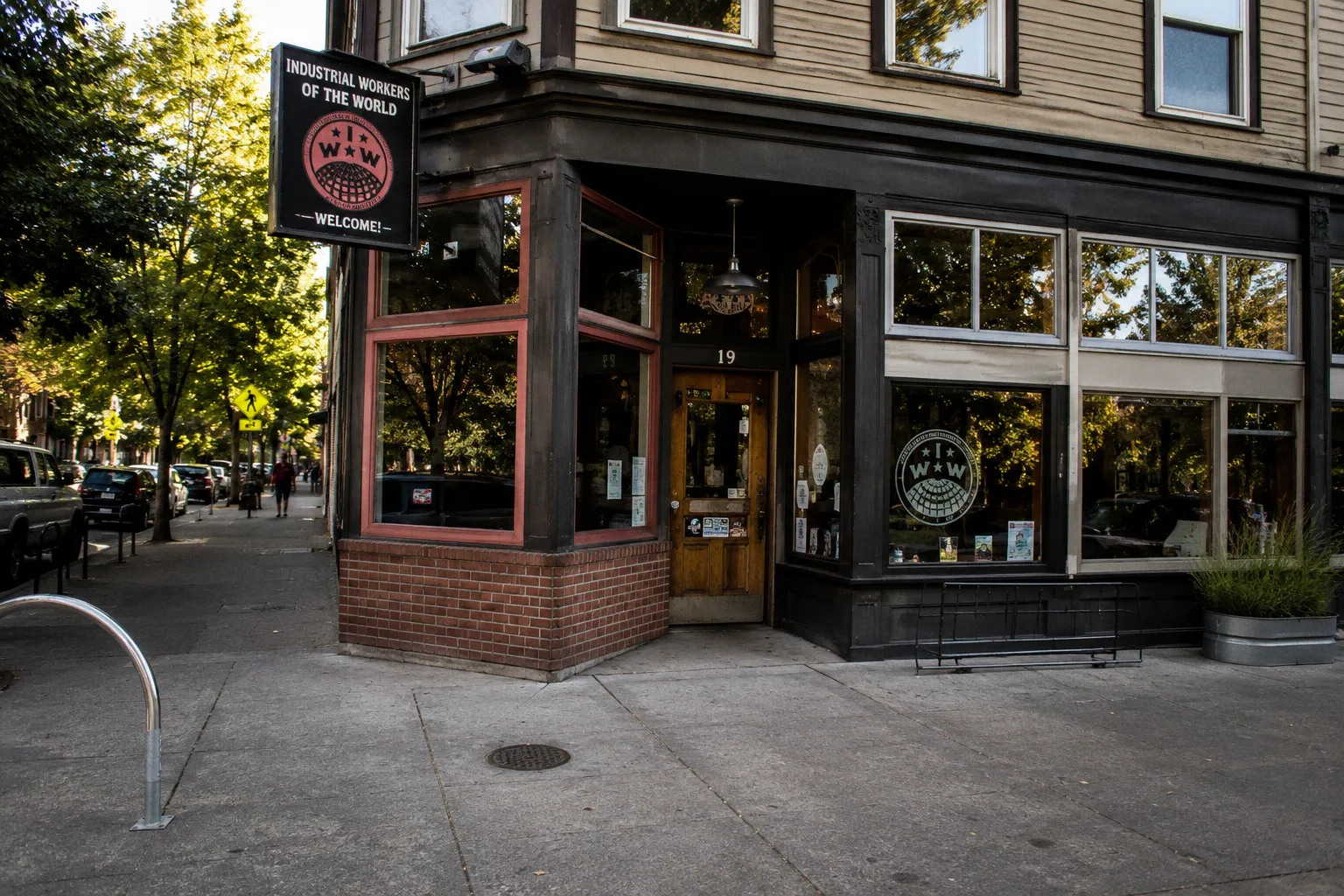
The Industrial Workers of the World chartered their Portland branch more than a century ago, and the city's radical labor infrastructure never fully disappeared—it just moved between substrates. In the 2010s, organizing intelligence lived in PDFs stapled to telephone poles and union meetings held in church basements. By the early 2020s, the same intelligence migrated to spreadsheets, Signal threads, and collaborative maps pinned with red dots over Portland neighborhoods.
The shift was not cosmetic. When a worker reports that a manager held a captive audience meeting at 7 a.m.—mandatory attendance, anti-union literature distributed as a "reading packet"—that report needs to reach fifty thousand potential customers in under a week, or the contract negotiation collapses. Paper flyers cannot move at that speed. A crowdsourced map pinned to a public website can.
Portland's activist mapping projects are not top-down products. They are federated, maintained by overlapping coalitions: the local IWW branch, independent barista guilds, neighborhood tenant unions, and ad-hoc Slack groups where workers swap notes about which shops have retained the boutique law firms that specialize in dismantling organizing drives. The result is a living cartography of class conflict disguised as a coffee guide.
A boycott without verification is a rumor with a checkbook attached.
The temptation to treat these maps as definitive is precisely the trap. They are not Yelp. They are checkpoints—waypoints in a longer investigation. The person pinning the red dot is usually a worker, not a journalist. The data is fragile. The consequences of getting it wrong fall on people who cannot absorb them.
Decoding Union-Busting Tactics in the Coffee Industry
Union-busting in the service sector is rarely a dramatic firing. It is a slow, documented campaign of pressure calibrated by consultants who charge by the hour and bill for results.
The standard playbook in Portland cafes follows a recognizable arc. First, the moment a union petition surfaces—or sometimes before, if an owner has retained a monitoring service that scrapes social media for organizing chatter—a labor-relations consultant arrives. These firms are not advertised. They are sourced through regional hospitality associations and billed in invoices as "training" or "culture work." Second, the consultant schedules captive audience meetings: closed-door sessions where attendance is mandatory, questions are discouraged, and the legal limits of what management can say are tested right up to the edge. Third, individual organizers are targeted. A barista who circulated the petition receives a written warning for an unrelated policy violation—a missing hairnet, a cash drawer two dollars short—that conveniently predates the union activity by exactly the statute of limitations needed to deny retaliation.
The consumer never sees any of this. What the consumer sees is a smiling barista, a competent latte, a tip jar. The structural violence is interior. It happens in back offices and pre-shift huddles and emails marked "Confidential—Do Not Forward."
The four-dollar latte subsidizes the four-hundred-dollar consultant. We are not asked to notice.
This is why the activist map matters. It surfaces what the cafe's Instagram deliberately obscures: the difference between a shop where workers have a contract and a shop where the contract is the subject of an active fight. That distinction is the entire political content of your morning purchase.
Navigating Fragmented Data: Where to Find Reliable Labor Reports
Here is the uncomfortable truth nobody printing a "Do Not Patronize" list wants to print on the list itself: no single, universally updated, lawyer-verified map of union-busting cafes in Portland exists. The data is fragmented across IWW bulletins, organizing committee statements, encrypted group chats, and the public Instagram accounts of workers who are willing to be named.
The implication is practical. If you are planning to redirect your spending on the basis of an activist map, you are relying on reports that were gathered under pressure, in real time, by people whose jobs depend on getting the story right without exposing themselves to retaliation. This is not a flaw of the movement. It is a material constraint imposed by the structure of at-will employment, and it shapes what counts as "good enough" evidence.
Three sources tend to carry the most weight. First, formal statements from recognized labor organizations—the Portland IWW branch, established barista unions affiliated with larger federations, and joint worker centers—typically carry internal verification before publication. Second, multi-source corroboration: if three independent workers at the same shop describe the same captive audience meeting on the same date, that report has structural weight. Third, contemporaneous documentation: screenshots of internal Slack messages, recordings of mandatory meetings where recording was not explicitly prohibited, and dated emails. These are the evidentiary backbone of every credible boycott call.
What you should treat with caution: a single anonymous post on a neighborhood subreddit, a viral tweet that does not name the organizing body, and any "list" that does not specify its methodology. A guide that ranks the city's "top ten ethical cafes" without naming the unions it consulted is not a solidarity resource—it is marketing with a progressive veneer. For readers who want a different lens on local culture and consumer coverage, mainstream lifestyle hubs like habertarz.com often publish roundups that ignore labor entirely, which is itself useful information about the editorial blind spots of consumer journalism.
From Digital Awareness to Direct Action: Supporting Organized Shops
Knowing which shop to avoid is half the work. The other half is knowing which shop to put your money into, and why that second act is politically heavier than the first.
A unionized cafe is not automatically a perfect workplace. Contracts are negotiated, not granted, and the first contract is almost always weaker than the third. But a shop where workers have a signed agreement with grievance procedures, wage scales, and just-cause termination clauses is structurally different from a shop where the owner can fire a lead barista for distributing a petition and face no consequence beyond a quiet one-star review.
When you spend money at a union shop, you are doing three things simultaneously. You are sustaining employment under negotiated conditions, which raises the floor across the neighborhood as non-union shops compete for workers who now have a public benchmark. You are funding the union's bargaining committee, because dues are deducted from those wages. And you are demonstrating to management that the contract did not trigger a customer exodus—the opposite of the argument every union-avoidance consultant makes in their initial pitch to a frightened owner.
There are also moves beyond patronage. Show up to a contract negotiation in person. Bring coffee and pastries to the picket line. Signal-boost fundraising drives for legal defense funds. If you are a writer, write about the contract campaign. If you are a designer, make the flyers. If you are an accountant, offer an hour of pro bono bookkeeping for the bargaining committee. Material solidarity is not a single transaction; it is a sustained transfer of resources to a constrained side of a structural imbalance, and it compounds over time in ways the boycott alone cannot.
The Ethics of Consumer Solidarity: Verifying Before You Spend
The last section is about discipline. A boycott weapon wielded carelessly is a weapon that injures the wrong target.
Portland's activist coalitions have internalized a basic rule over years of high-profile mistakes: do not name a shop as union-busting without a verifiable report from a recognized labor organization or a credible news source. This rule exists for two reasons. First, a misfired boycott can destroy a small business whose owner is, in fact, neutral or supportive—and whose workers will lose jobs in the cleanup. Second, repeated false claims give management a counter-narrative: that the union drive was never about wages, it was about a vendetta, and the workers involved were manipulated by outside agitators. That narrative travels faster than any retraction and is harder to kill.
The verification protocol is not complicated. Before you act on a report, ask three questions. Is the report sourced to a recognized organizing body or a named worker willing to attach their identity? Is the alleged conduct specific—dated, located, described in operational terms—or is it vague enough to fit almost any shop? Does the report survive contact with the workers at the shop themselves, who can confirm or deny that an organizing drive is active and what stage it has reached?
If the answer to all three is yes, you have a solid basis for redirection. If the answer to any of them is no, you hold the report. You wait. You ask the organizing committee for confirmation. You do not let the urgency of the moment override the structural discipline that makes solidarity credible in the first place—and credibility, once lost in a labor market this small, does not return inside a single contract cycle.
The map is a tool. The contract is the destination. We use the first to reach the second, not to substitute for it.
Portland's labor maps are not finished products. They are contested archives, updated nightly by people who are also showing up to early shifts and filing grievances. To use them well is to treat them as one input among several, weighted but not absolute, and to remember that the person who built the map is almost always also the person standing on the picket line in the rain. Our role as consumers is to read the map, verify the report, redirect the money, and then show up.
The cafes that survive a contract campaign do not look different from the outside. The latte tastes the same. The wifi still works. Everything visible has remained identical. What has changed is the invisible architecture of power in the back room—and that, more than any ranking, is the metric worth measuring.