European EV Manufacturers Downsize to Compact Models Like Renault Twingo E-Tech to Rival Bloated SUVs and
For decades, Europe's automotive industry engineered a deliberate shift toward bloat.
Harrison Lockwood, Lead Columnist on Systemic Justice & Climate Action·updated June 27, 2026
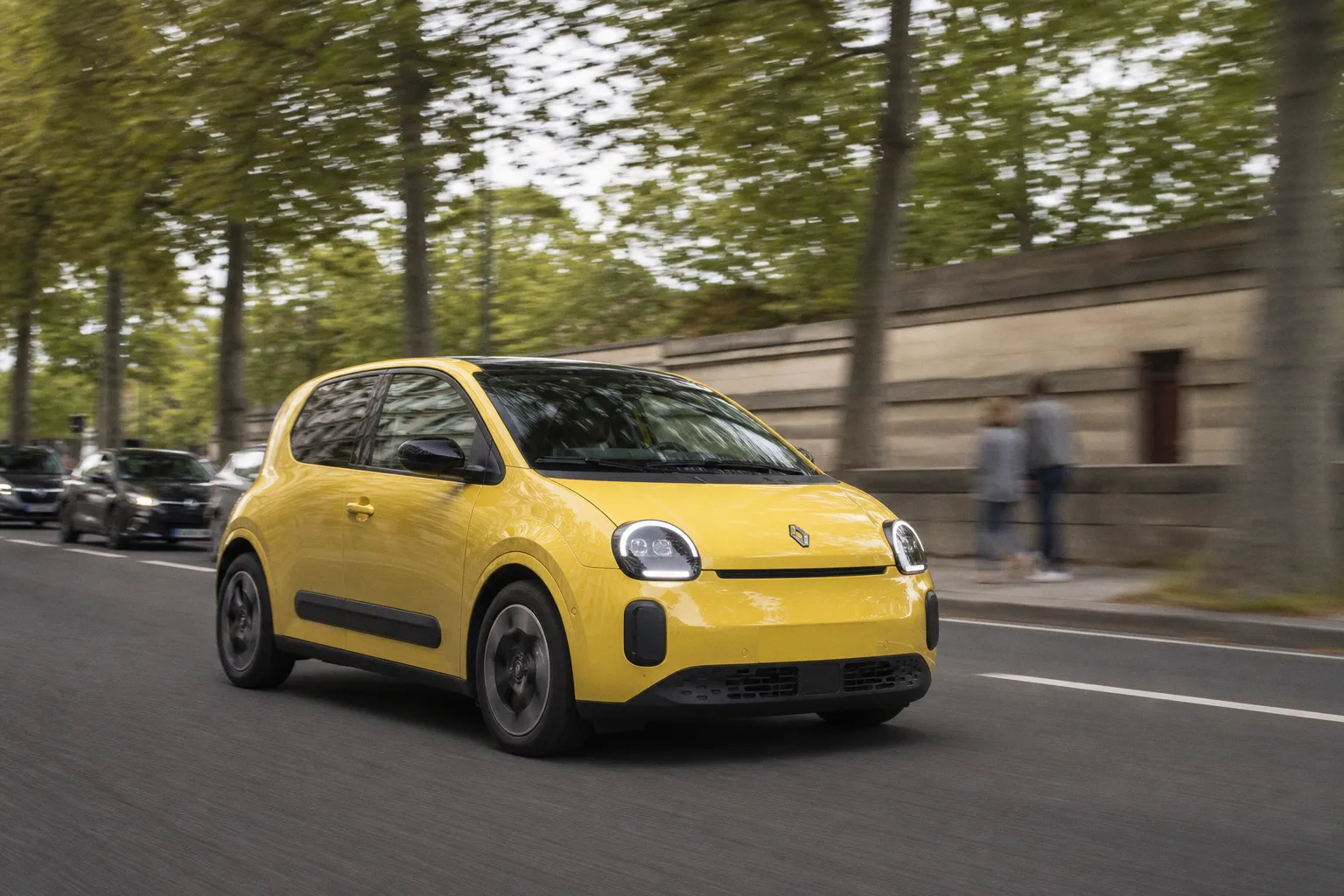
Now the industry is scrambling to reverse course. The Renault Twingo E-Tech, priced from €19,490 in France and heading to the UK around £18,000 next year, is the most visible marker of a turn toward smaller, cheaper electric vehicles built for the medieval street grids of London, Paris, and Rome. Citroën has the ë-C3 and is reviving the 2CV nameplate. Peugeot offers the E-208. Renault's own Renault 5 E-Tech took Europe's Car of the Year title in 2025. The Mini Cooper Electric and Fiat 500e have been on sale for years, with Volkswagen's ID.Polo on the way. Even quadricycles like the Citroën Ami and Micro Microlino are carving out a niche.
The material calculation underneath
Battery density has finally improved enough, and manufacturing costs have dropped enough, that smaller EVs stop being a financial loss leader. But the more honest driver is competitive pressure from Chinese manufacturers flooding European markets. Without that external force squeezing margins, there is little evidence the legacy automakers would have voluntarily downsized — they spent twenty years extracting premium pricing from SUVs instead.
The climate arithmetic reinforces the shift. Road transport still produces roughly a fifth of EU emissions. Upgrading from a small petrol hatchback to an electric SUV delivers two steps forward and one step back: tailpipe emissions vanish, but the larger battery and greater mass raise manufacturing emissions and energy demand per kilometre. The cars clog streets they were never designed for, and they extract more from the grid than necessary.
The heavy-duty frontier
The same logic is now hitting commercial vehicles, where the material stakes for decarbonisation are larger. ICCT data for Q1 2026 shows battery-electric buses have moved from niche to mainstream fleet procurement across European cities, capitalising on predictable routes and depot charging. Electric light and medium-duty trucks under 12 tonnes are the fastest-growing zero-emission segment, driven by urban delivery patterns and tightening low-emission zones.
Heavy trucks remain the hardest nut. Long-haul freight requires payloads, megawatt-scale charging, and grid upgrades that do not yet exist at scale. But 2026 is the first full year manufacturers operate under the EU's new heavy-truck CO2 reduction standards, and logistics companies are beginning to place larger battery-electric orders. The policy floor is finally bending the industry.
What to watch
Whether Renault, Stellantis, and Volkswagen sustain the small-car pivot once Chinese competitive pressure eases, or quietly revert to SUV margins. Whether EU regulators hold the line on heavy-truck CO2 standards and resist industry lobbying to weaken them. Whether municipal charging infrastructure scales at the pace the smaller vehicle segment actually requires — or whether the cars arrive and the plugs do not.
The shift underway is real, but it is the product of structural pressure, not corporate virtue. Renault's own design chief, Laurens van den Acker, put it plainly: "The world is going to be saved by small electric cars." Maybe. But we know who did not deliver them until forced to.