Governments push energy efficiency amidst Strait of Hormuz crisis
Overnight, five Asia-Pacific governments signed a joint pledge to make energy efficiency "a cornerstone of energy policy." The trigger? Not climate ambition. Not the promise of lower bills.
Harrison Lockwood, Lead Columnist on Systemic Justice & Climate Action·updated July 02, 2026
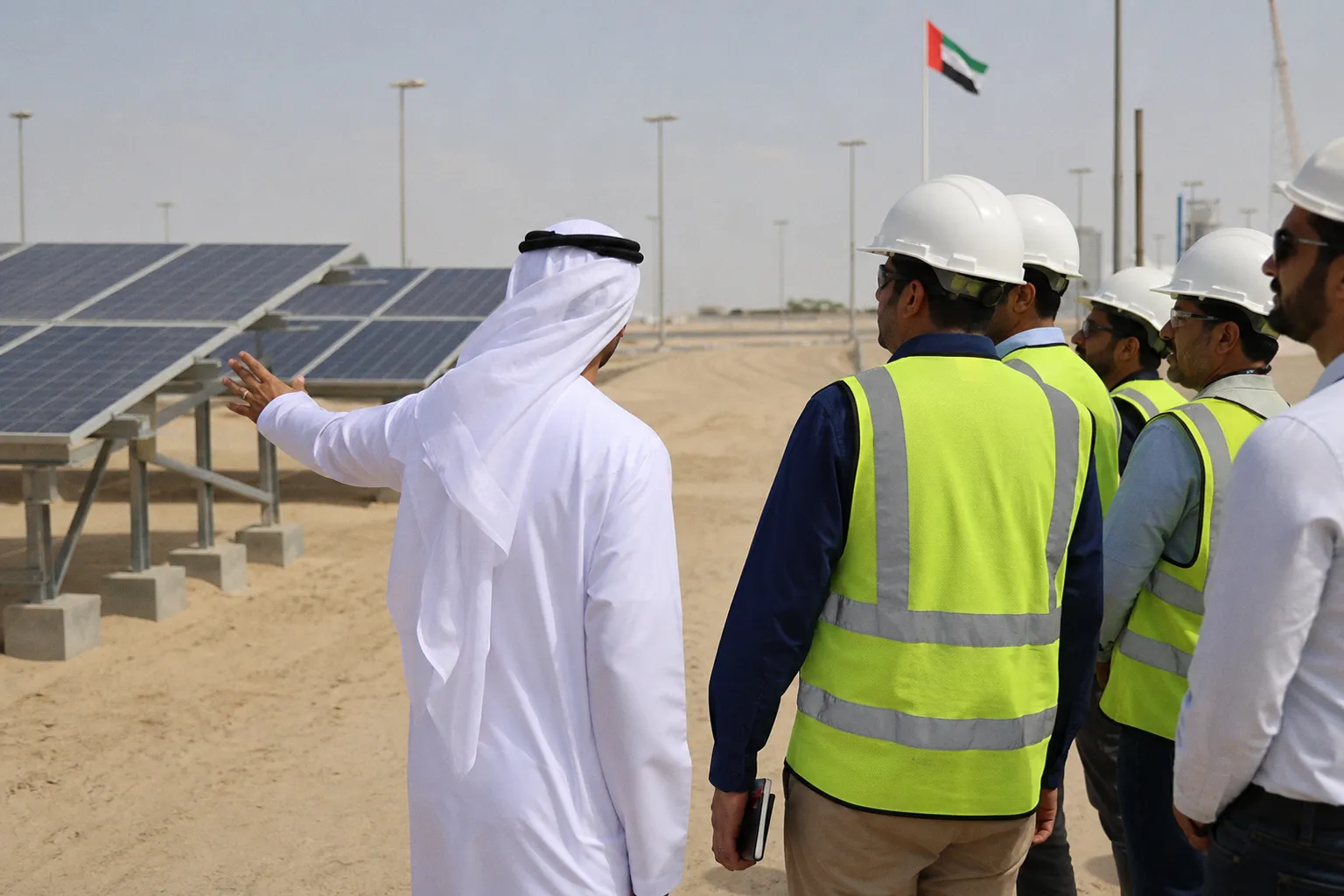
This is the logic of crisis capitalism applied to decarbonization. The International Energy Agency hosted its 11th Annual Global Conference on Energy Efficiency in Montreal last week, and the joint statement that emerged reads less like a climate roadmap and more like a damage-control memo. Japan, Korea, Lao PDR, Uzbekistan, and Vietnam committed to stronger efficiency measures—better buildings, smarter data centres, support for households and small businesses squeezed by volatile energy prices. All framed, explicitly, as a response to market disruption tied to the Strait of Hormuz crisis and the broader Middle East conflict.
The efficiency-as-security pivot
The language here is telling. Fatih Birol, the IEA's Executive Director, described efficiency as "one of the most powerful tools available to governments for strengthening energy security, lowering costs, and boosting economic competitiveness." Canada's Environment Minister Julie Dabrusin called it "one of the highest-return investments an economy can make." Notice what's missing from those framings: emissions. The entire pitch is economic leverage—lower costs, stronger resilience, competitive edge. Efficiency isn't being sold as climate action. It's being sold as insulation against geopolitical shock.
This matters because it reveals where the actual political leverage sits. Governments won't move at the speed the crisis demands when the argument is abstract—2030 targets, Paris Agreement commitments, long-term planetary stability. But the moment energy prices spike and voters feel the squeeze, efficiency becomes a "cornerstone" overnight. The IEA has been pushing the goal of doubling global energy efficiency improvements by 2030 since COP28. It took a shipping chokepoint in the Persian Gulf to turn that target into a joint statement with actual signatories.
Who's at the table—and who isn't
The participant list deserves scrutiny. Japan and Korea are major energy importers whose economies are structurally exposed to Strait of Hormuz disruption; their presence is rational self-interest, not climate leadership. Lao PDR, Uzbekistan, and Vietnam are economies where energy demand is rising fast and efficiency standards lag far behind industrialised nations. These aren't the blocs that created the emissions crisis. They're the ones bearing the material costs of a fossil fuel system they didn't build.
Where are the petrostates? Where are the major extractors? ConocoPhillips, meanwhile, is publicly outlining its "energy growth strategy as a global producer"—expanding extraction while governments downstream pledge to use less. That's the structural contradiction laid bare: the same geopolitical instability that makes efficiency politically viable also enriches the actors whose extraction caused it. The joint statement calls for "measures to unlock investment without adding administrative burdens." Translation: the money must flow, and regulation must not slow it down.
What to watch next
This isn't a breakthrough. It's a repositioning. Governments are learning to frame climate-adjacent policy as economic crisis management because that's the only register politics responds to right now. The question is whether these pledges translate into binding standards, actual funding for vulnerable households, and efficiency mandates for data centres and commercial buildings—or whether they evaporate the moment oil prices stabilise and the Strait of Hormuz fades from headlines.
The IEA itself noted this builds on "prior commitments" from previous conferences. We've seen how prior commitments hold up under political pressure. Track what Japan and Korea actually legislate in the next six months. Track whether the "support for vulnerable households" language produces direct transfers or just more tax incentives that benefit property owners. And watch what happens to the doubling-by-2030 target if this crisis resolves before the policy architecture is locked in. Crisis-driven action is only as durable as the crisis itself.