Malaysia's BESS Gambit: A New Hub for Global Energy Storage
On the sidelines of a German energy conference, two corporations quietly signed a deal to build a factory. This is not a story about manufacturing.
Harrison Lockwood, Lead Columnist on Systemic Justice & Climate Action·updated July 01, 2026
The Strategic Geography
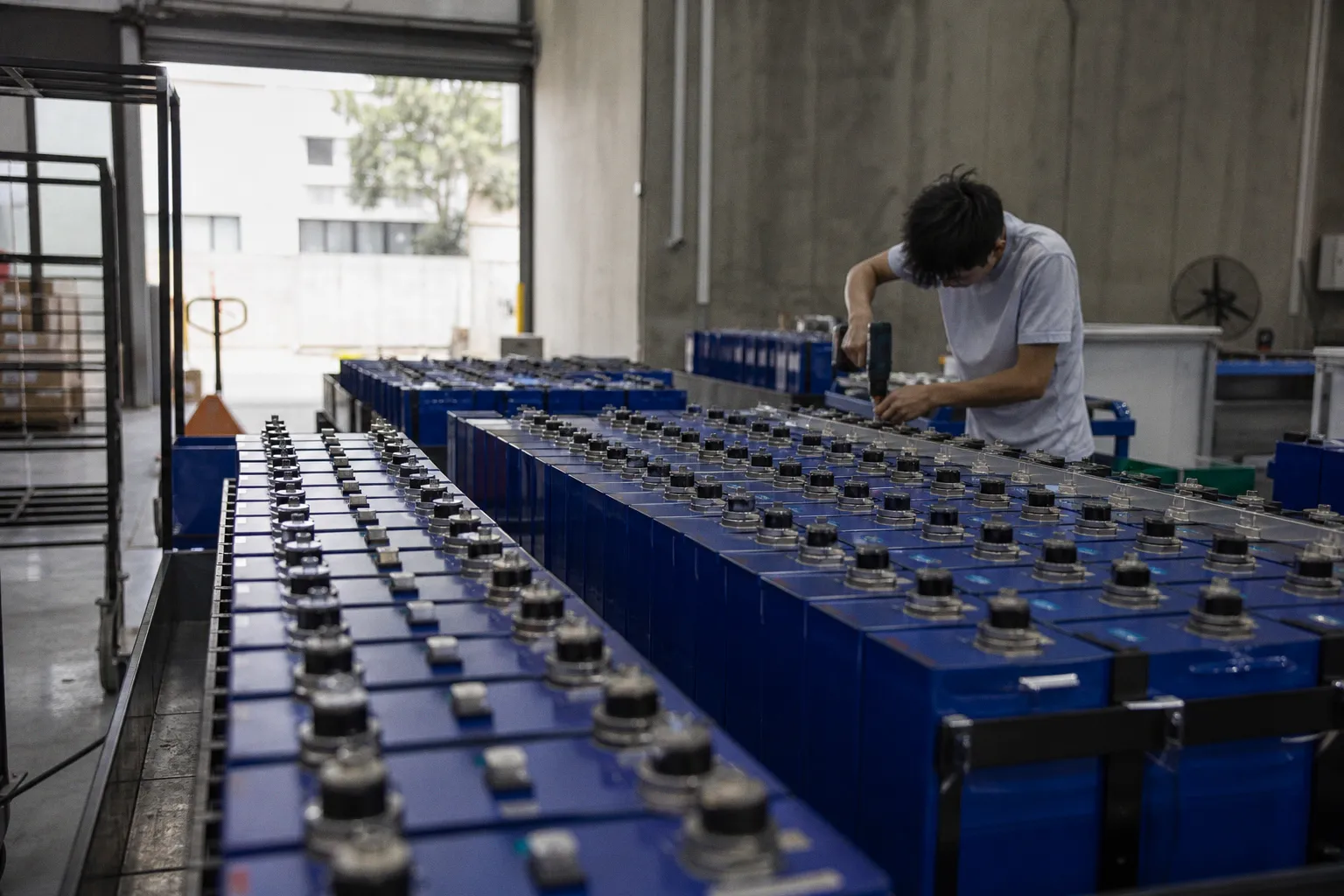
Malaysia was not chosen by accident. It is the deliberate target of corporate and state capital converging on a calculated geopolitical bet. HyperStrong, a Chinese energy storage giant, and Germany's RCT Power are establishing their joint venture there to exploit a specific material reality. Malaysia's National Energy Transition Roadmap demands 70% renewable capacity by 2050, a target that makes grid-scale storage, or BESS, not an option but a physical requirement for grid stability. The government's MyBeST tender program is the policy lever creating this demand. HyperStrong is already embedded, having won the 100MW/440MWh Pekan project. This new factory is a consolidation, not an exploration. They are doubling down on a market their own policy helped manufacture.
Climate as a Corporate Design Brief
Here is where the environmental vulnerability of the region is directly leveraged into a business moat. The tropical climate—with its punishing heat, humidity, and salinity—destroys standard battery storage systems. By manufacturing locally, the joint venture can produce BESS hardened for these specific conditions. This transforms a climate liability into a proprietary advantage, locking out competitors selling generic, off-the-shelf solutions. It is a textbook move in systemic extraction: identify a vulnerability, engineer a product to solve it, and then control the supply for the region that needs it most.
The Supply Chain Decentralization Myth
The corporate press release speaks of "resilient supply chains" and "regional hubs." Let's be precise about what this means. This is a strategic de-risking of HyperStrong's own global operations. Ranked among the top five global BESS integrators by BloombergNEF, HyperStrong's model is integration and management, not cell production. It sources lithium-ion cells from giants like CATL. Building a Malaysian factory diversifies its manufacturing footprint away from a single point of failure, securing its own market position. The projected 3 GWh of regional BESS demand by 2030 is not a public good to be served; it is a revenue stream to be captured and secured through physical infrastructure. This is the material reality of the energy transition: it is being built on a logic of centralized corporate control, now distributed into new geographic silos. The grid of the future is being assembled in boardrooms and on conference sidelines, one strategically placed factory at a time.