Green tech and the future of Africa’s economy
Nearly 600 million people across Africa still live without reliable access to electricity, a stark material condition that serves as a structural barrier to basic economic survival.
Harrison Lockwood, Lead Columnist on Systemic Justice & Climate Action·updated June 20, 2026
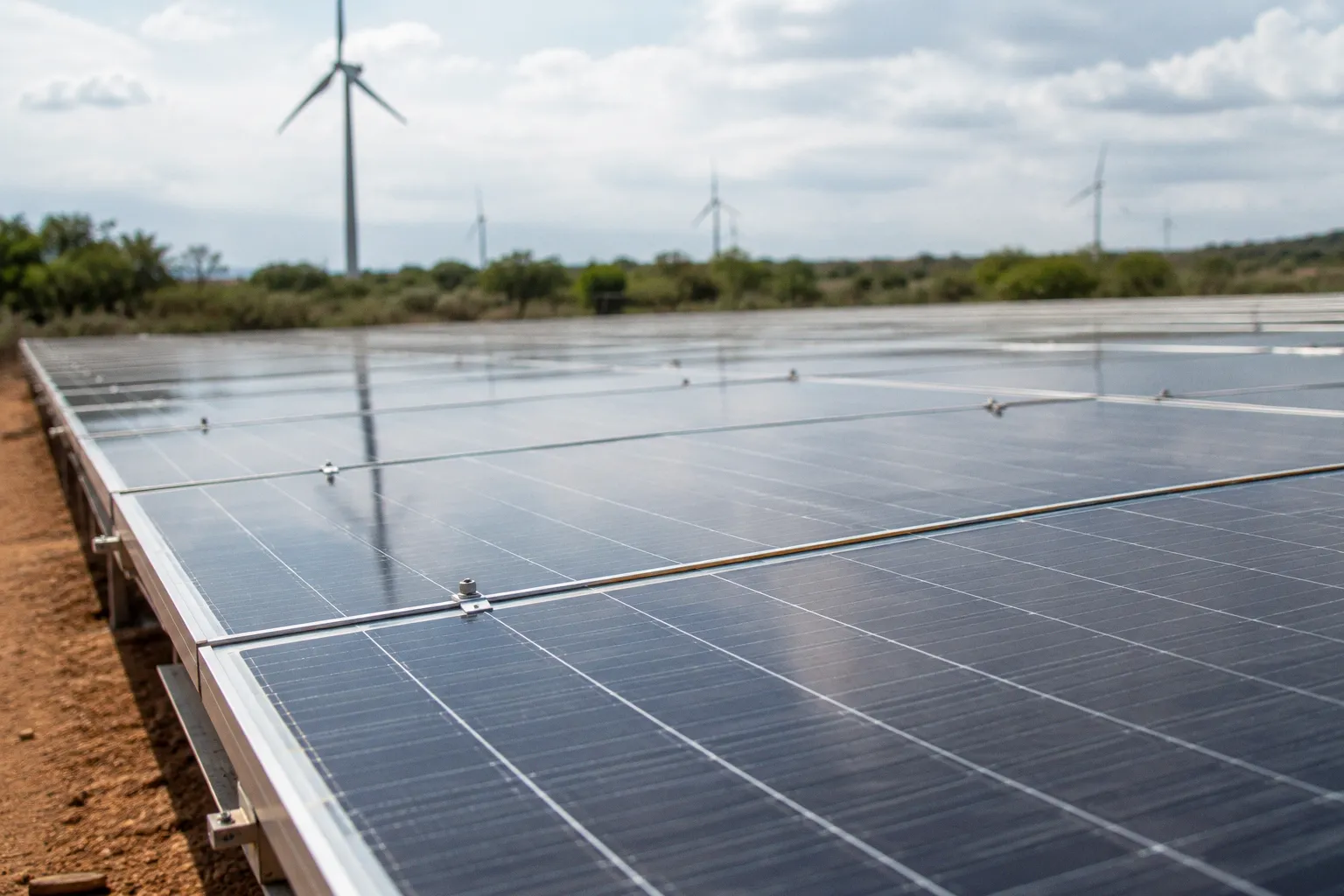
Dismantling the Extraction Loop
The structural trap of the post-colonial economy has long relied on a simple mechanism: import expensive fossil fuels, drain foreign exchange reserves, and export the ecological damage. The rise of local electric mobility solutions, such as the deployment of tens of thousands of electric motorcycles by companies like Spiro in cities like Kigali and Lagos, directly disrupts this cycle. Every liter of imported fuel displaced by locally generated renewable energy strengthens foreign exchange stability and insulates local economies from external price shocks.
This is why institutions like the African Development Bank are shifting their focus, increasingly treating mini-grids and clean technology not as charity or marginal environmental initiatives, but as foundational economic infrastructure. When local EV assembly and decentralized solar grids take root, they alter the material conditions of labor. The productivity gains, improved income levels, and health outcomes documented in Nigeria and Kenya are not the result of corporate benevolence; they are the direct material consequences of communities gaining direct control over their energy production, replacing years of dependence on generators and kerosene lamps.
The Geopolitics of Technology Ownership
While decentralized grids offer a pathway out of energy poverty, the broader green transition remains deeply entangled in global power dynamics and capital concentration. We see this in South Africa, where Phelan Green recently selected Johnson Matthey technology for its e-SAF project, demonstrating how local decarbonization efforts still rely on the proprietary technology of Global North corporations. Similarly, as countries like Vietnam and Poland seek to boost cooperation in green technology and the circular economy, the risk remains that the intellectual property and capital leverage will remain concentrated in foreign hands rather than fostering local industrial capacity.
Even initiatives like India's newly launched ECOHUB.IN incubator—designed by Resilience Actions to scale early-stage circular economy and clean-tech enterprises—highlight the systemic bottleneck: ideas exist, but the capital and infrastructure required to scale them are heavily gatekept. If we are to transition away from extractive economics, we must ensure that green technology does not merely become a new frontier for foreign capital accumulation, but remains a tool for local self-determination and systemic redistribution.