Is Climate Change Supercharging El Niño? Scientists Don’t Agree.
The New York Times published a piece this week asking the question climate scientists have been hedging in public for years: is climate change supercharging El Niño?
Harrison Lockwood, Lead Columnist on Systemic Justice & Climate Action·updated June 21, 2026
The Science Won't Sit Still
Here is what we know with certainty, courtesy of NOAA: El Niño conditions have developed in the tropical Pacific, and the agency projects a 63% chance of a "very strong" event this fall, defined as sea surface temperatures exceeding 2°C above average in the Niño-monitored region. A very strong El Niño does not drift in quietly. It pushes global average temperatures to record highs, rearranges rainfall patterns across continents, and turns food systems into roulette wheels for billions of people who never burned the carbon causing it.
The scientific disagreement, per NYT, is not really about whether El Niño is intensifying. It is about attribution: how much of the ferocity comes from long-term anthropogenic warming versus natural variability. This is the kind of semantic hedge that fossil fuel lobbyists have weaponized for forty years. "We cannot be sure" is not a defense — it is a delay tactic dressed as rigor. Every degree of uncertainty they manufacture buys another quarter of extraction.
The Reefs Are Already Voting
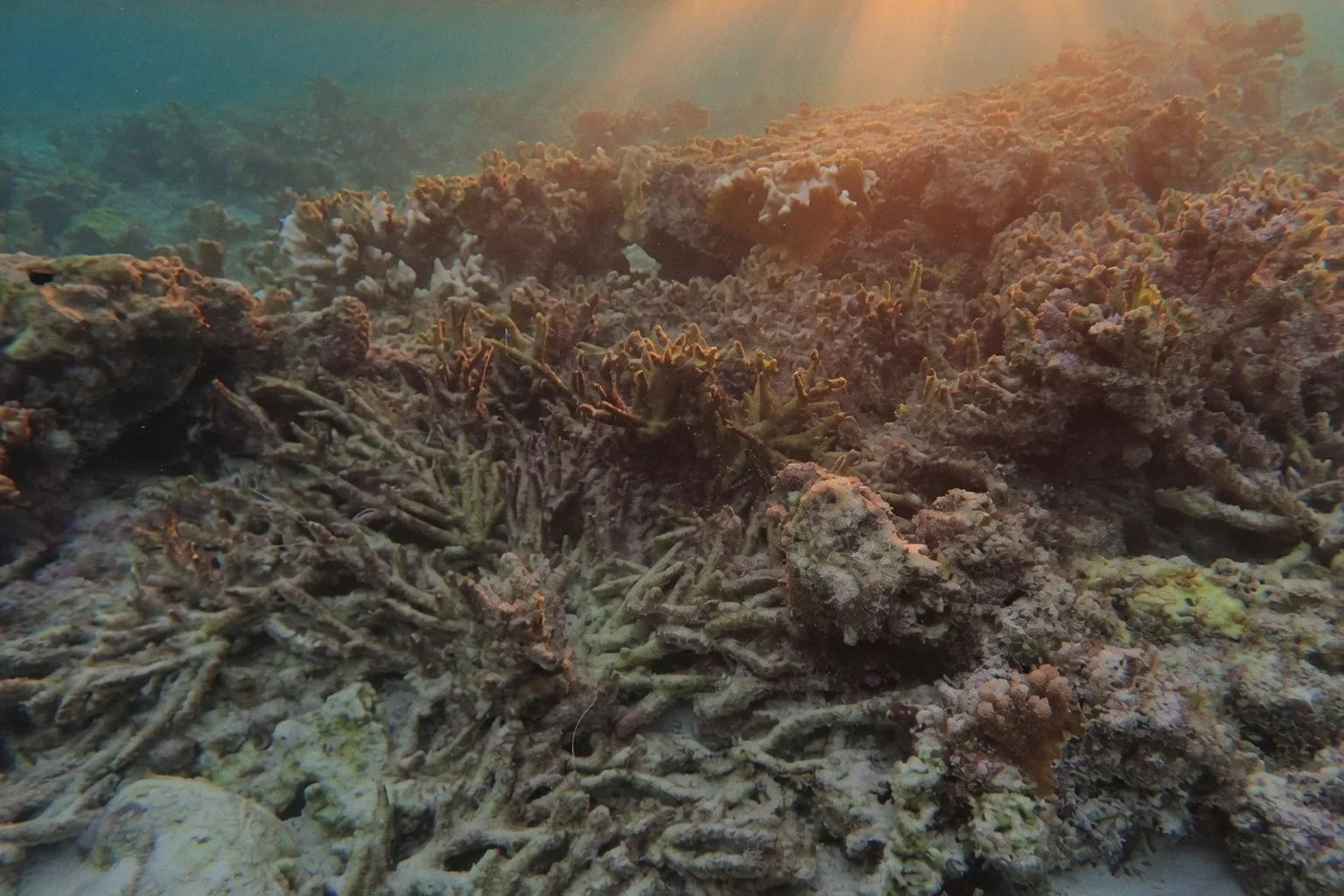
The material evidence is settling the argument whether the modelers will or not. Between 2023 and 2025, coinciding with a historically strong El Niño, bleaching-level heat stress hit 84% of the world's coral reef area across at least 83 countries. That is the fourth mass coral bleaching event ever recorded and the second in a decade. The ocean is not waiting for the peer review cycle.
But here is the part that complicates the doom: new research from the Wildlife Conservation Society and Macquarie University, analyzing more than 45,000 coral surveys alongside decades of climate and ocean data, found that climate-resilient reefs are three times more widespread than previously estimated — spanning 165,922 square kilometers across 71 countries. Sixty-one percent of these resilient habitats sit within just five nations: the Bahamas, Cuba, Australia, Indonesia, and the Philippines. The industry will read that finding as a permission slip. We should treat it as a triage map, a list of the places worth defending first when the next thermal insult lands.
The Stakes Are Structural, Not Academic
When atmospheric carbon crosses certain thresholds, the conversation stops being about degrees and starts being about which countries starve, which coastlines disappear, and which governments can be held accountable. El Niño's typical fallout — drought in Australia, sub-Saharan Africa, and Southeast Asia; flooding in the southern U.S., South America, the Horn of Africa, and Central Asia — is an extraction event. It strips the Global South of water and arable land while the economies that drove the warming buy insurance and rebuild in place.
NOAA's next update is the one to watch. A 63% probability of a very strong event means we have weeks, not months, to stop treating this as a weather story and start treating it as an infrastructure emergency. Coral can be resilient. Coastal communities cannot be relocated by optimism, and elected officials cannot be absolved by a NOAA press release.