Musadik calls for binding global water covenant, says water security has become climate justice issue
Two hundred and forty million people depend on a treaty. Most of them have never read it.
Harrison Lockwood, Lead Columnist on Systemic Justice & Climate Action·updated June 30, 2026
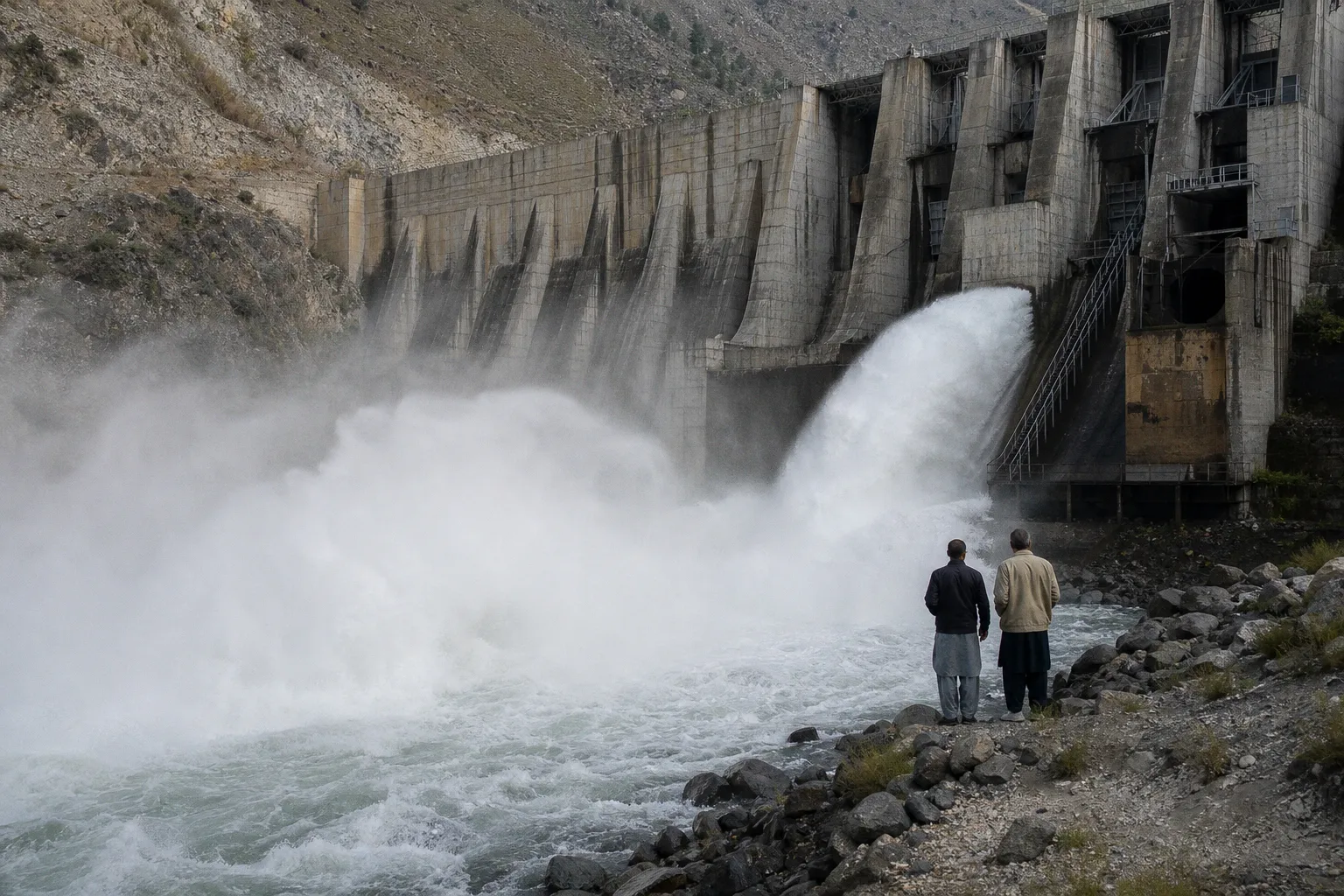
The mechanics of what's being contested
Speaking Tuesday at an international conference in Islamabad on the 1960 Indus Waters Treaty, Malik made the case with surgical plainness. "This is not Pakistan's case," he told assembled diplomats. "This is the case and test for water rights for all downstream billions and billions and billions of people who live downstream."
The backstory is the part that should make every climate analyst sit up. India placed the World Bank-brokered treaty "in abeyance" last year, citing a deadly militant attack in Indian-administered Kashmir that New Delhi blamed on Pakistan. Islamabad denied the allegation and rejected the suspension as unlawful. The treaty itself carved the six rivers of the Indus basin into thirds — full use of the eastern three (Ravi, Beas, Sutlej) going to India, the western three (Indus, Jhelum, Chenab) largely allocated to Pakistan, with India holding limited use rights on the western rivers under the agreement.
That architecture of compromise, built under World Bank auspices in 1960, has held for nearly seven decades through wars, nuclear tests, and three military coups.
Why this is a climate justice ledger, not a bilateral row
Here is the leverage Malik is naming out loud. An upstream state with downstream vulnerability is the geography of climate injustice already in motion. Water stress is accelerating across South Asia. A unilateral suspension — even before any technical cutoff — weaponizes uncertainty itself: markets reprice, farmers hedge, lenders pull back from infrastructure. That is austerity-by-fiat applied to a river basin.
Malik pointed at the Nile, the Danube, and other transboundary systems to drive the point home. His ask, unusually concrete for a diplomatic forum: not another voluntary declaration but a binding covenant with "political consequences, economic consequences, diplomatic consequences."
Pakistan's Information Minister Attaullah Tarar, addressing the same conference, made the legal layer explicit. The treaty, he argued, "cannot be amended, revoked, suspended or held in abeyance" without mutual consensus. He called the Indus a "lifeline" for Pakistan's 240 million people and warned that "our national leadership stands resolved to respond effectively to restore the water."
What to actually track
Three signals matter now. First, whether the Islamabad conference produces anything more durable than communiqué language — and whether downstream states beyond South Asia treat this as their own precedent worth contesting before their rivers become bargaining chips. Second, what the World Bank — original broker of the Indus treaty — says about one party placing a treaty it helped design "in abeyance." Third, whether the climate-justice framing Malik is pushing survives translation into enforceable obligations, or gets filed alongside every other voluntary declaration downstream nations have already learned to distrust.
The structural question being forced open in Islamabad is the same one climate-vulnerable countries will face again and again: in an age of accelerating water scarcity, can international law survive unilateral suspension by whoever holds the upstream geography? If the answer is no, water rights have already been written out of the climate justice ledger — and the rivers will be allocated by force, not by covenant.