Resilience Actions, a Re Sustainability Initiative, Launches ECOHUB.IN to Power India's Climate and Circular E
Re Sustainability's philanthropic arm, Resilience Actions, is launching ECOHUB.IN — a sustainability incubator targeting Indian startups in climate tech, pollution management, resource efficiency, and circular economy innovation.
Harrison Lockwood, Lead Columnist on Systemic Justice & Climate Action·updated June 20, 2026
What "ecosystem" actually means
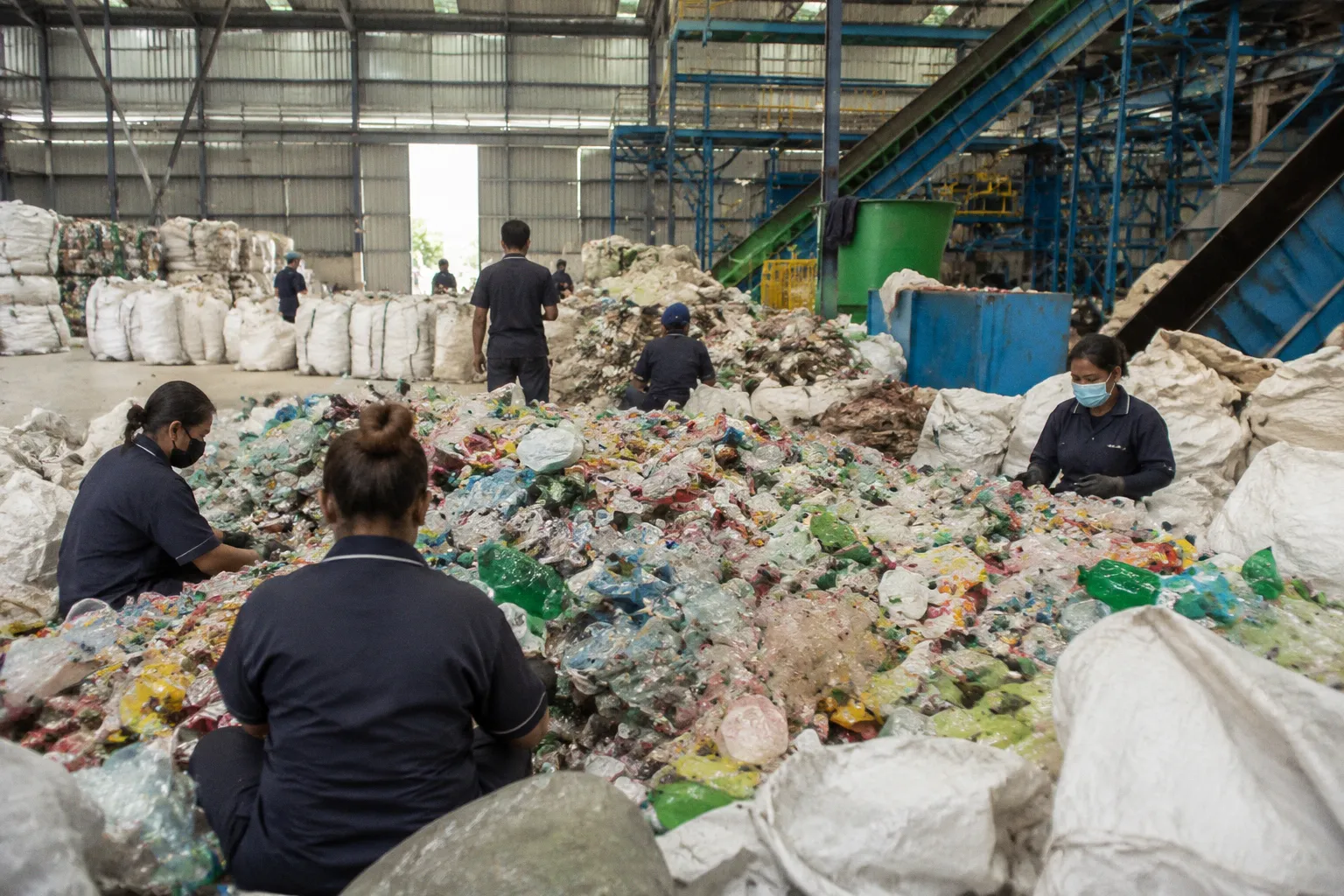
The recurring word in the launch materials is "ecosystem" — and the operative one is Re's own. Selected startups gain access to "domain experts," "real-world" validation environments, and what the company calls "pathways for commercial deployment and scale." The implicit architecture is a corporate accelerator: capital-ready ventures absorbed into the sponsor's commercial orbit, with mentorship, advisory support, and pilot-to-commercial hand-offs designed to accelerate market entry. Managing Director and Group CEO Masood Mallick argues that "India's sustainability transition will not be driven by infrastructure alone" but by "innovation, entrepreneurship, and the ability to scale ideas." The framing positions venture formation as the binding constraint. It sidesteps the regulatory vacuum, the enforcement deficit, and the labor conditions that shape what India's waste economy actually looks like on the ground. Those are material conditions, not ecosystem gaps.
The selection filter
The inaugural cohort will be drawn from startups past the ideation stage, with a working Minimum Viable Product, a committed team, and a "clearly defined market opportunity." That filter is investor legibility, not climate urgency. "Investment-readiness assistance" sits in the benefits list alongside mentorship — a tell. ECOHUB.IN is preparing companies to absorb private capital and operate inside Re's commercial logic, which is, in turn, the logic of waste management at industrial scale. The circular economy here is a growth market, not a reordering of material flows. The press release offers no information on equity arrangements, intellectual property terms, labor standards, public-benefit commitments, or community accountability — the governance details that would distinguish a genuine climate incubator from a corporate recruitment pipeline.
The wider pattern
Circular economy announcements are landing everywhere this month. CalRecycle's $41 million jobs allocation, a Lithuanian vice-minister's London forum, and now ECOHUB.IN all run on the same underlying logic: institutional actors claiming stewardship of the transition without naming the extractive arrangements that produced the problem in the first place. For Indian communities living adjacent to landfills, waste-to-energy facilities, and informal recycling economies, the question is not whether pilot programs will exist, but whether capital routed through corporate incubators will alter the conditions that made those geographies sacrifice zones. The inaugural cohort's application window is described as opening "shortly." Until we see the funding sources, the selection criteria, and any public-interest governance attached to the program, this reads as another platform for capital, not a plan for the climate.