Slate Auto says $24,950 electric truck will be profitable; targets positive cash flow next year
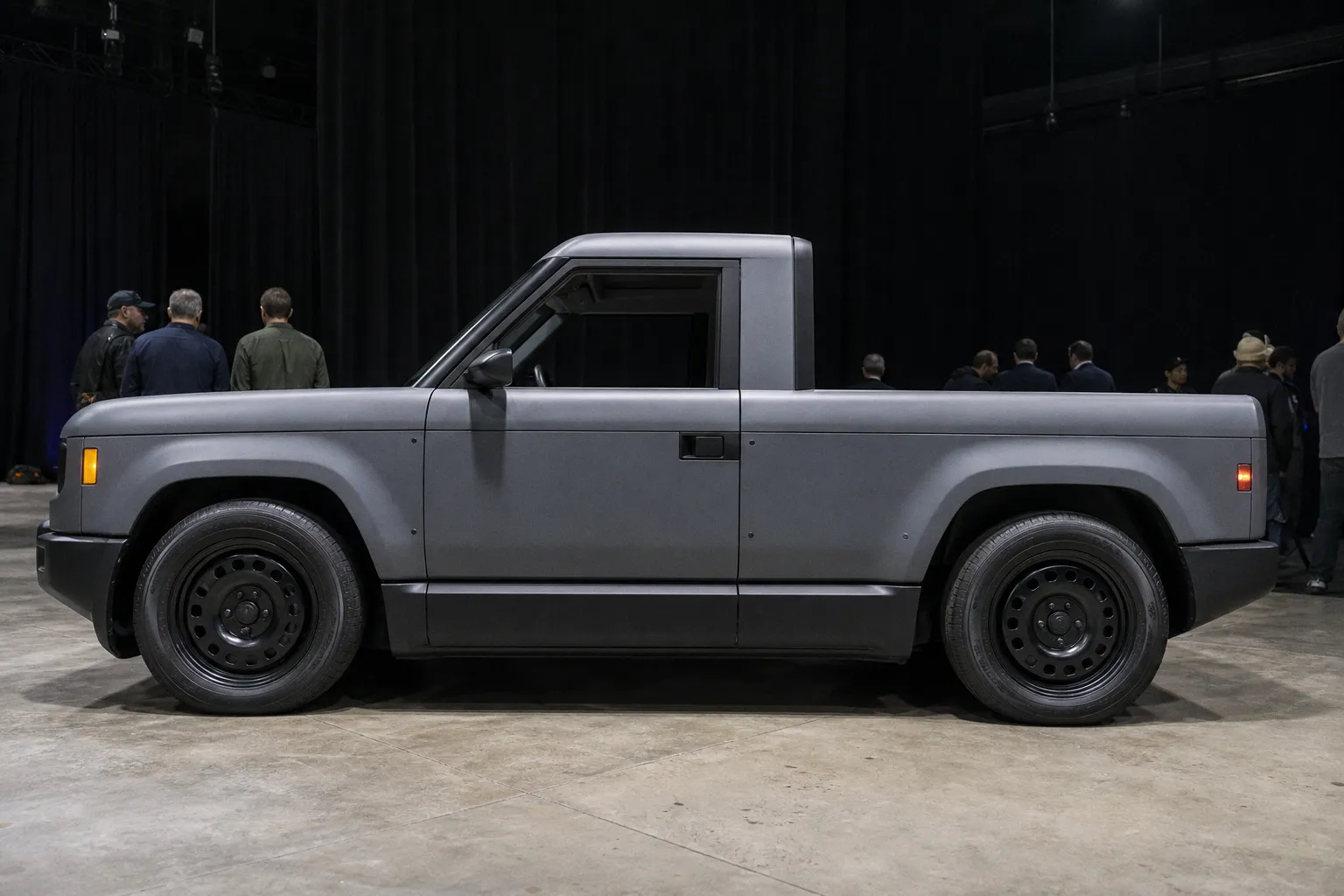
$24,950. That's the figure Slate Auto has reportedly attached to its electric pickup — a price low enough to dominate headlines and, according to CNBC, tied to a claim that the truck will be profitable and reach positive cash flow next year.
Harrison Lockwood, Lead Columnist on Systemic Justice & Climate Action·updated June 26, 2026
The price is a political instrument
Torque News framed it cleanly: Slate "turned a vehicle price into a major event," and that framing exposes more about the current car market than the truck itself. That's the correct read. A sub-$25K EV isn't just a product spec — it's a leverage point in a market that has spent a decade pricing electrification as a premium upgrade. Slate isn't selling a truck; it's selling the idea that an electric vehicle can sit below the psychological line where working-class buyers stop doing the math. That idea carries material consequences for every legacy automaker still trying to extract premium margins from the transition. The moment the floor shifts, the entire pricing architecture of American EVs shifts with it.
What "profitable" actually buys you
Slate's claim — profitable per unit, positive cash flow next year — deserves the same skepticism we'd apply to any startup's projections. But the structural question matters more than the spreadsheet: profitable under what conditions, on what subsidy stack, at what scale? The transition is still publicly underwritten. Bangladesh's 2026 budget just rolled out tax cuts explicitly designed to boost its EV market, per The Daily Star — one data point in a global pattern of states absorbing the cost of electrification while private actors capture the upside. When a startup promises profitability inside that architecture, "profitable" doesn't mean self-sustaining. It means the extraction model works as designed. Workers, taxpayers, and the climate take the risk; shareholders take the return.
What we should actually be watching
The CNBC report is the only solid anchor in this cluster — the rest is headline chatter and unrelated EV market pieces. So we hold the line and demand receipts. Does Slate deliver the truck at that price with margin intact, or does the number drift upward the moment reservations convert to orders? Does the supply chain — battery sourcing, assembly labor, parts leverage — hold up to scrutiny, or is profitability resting on the same low-road practices the auto industry has been running for decades? And critically: does this price point expand access for working-class buyers, or does it just give incumbents a new floor to race toward with their own stripped-down offerings, leaving the actual material gains stuck in the showroom? The headline is cheap. The accountability won't be.