U.S. Bans Polestar, Chinese-Owned EV Maker, From Selling Cars in the U.S.
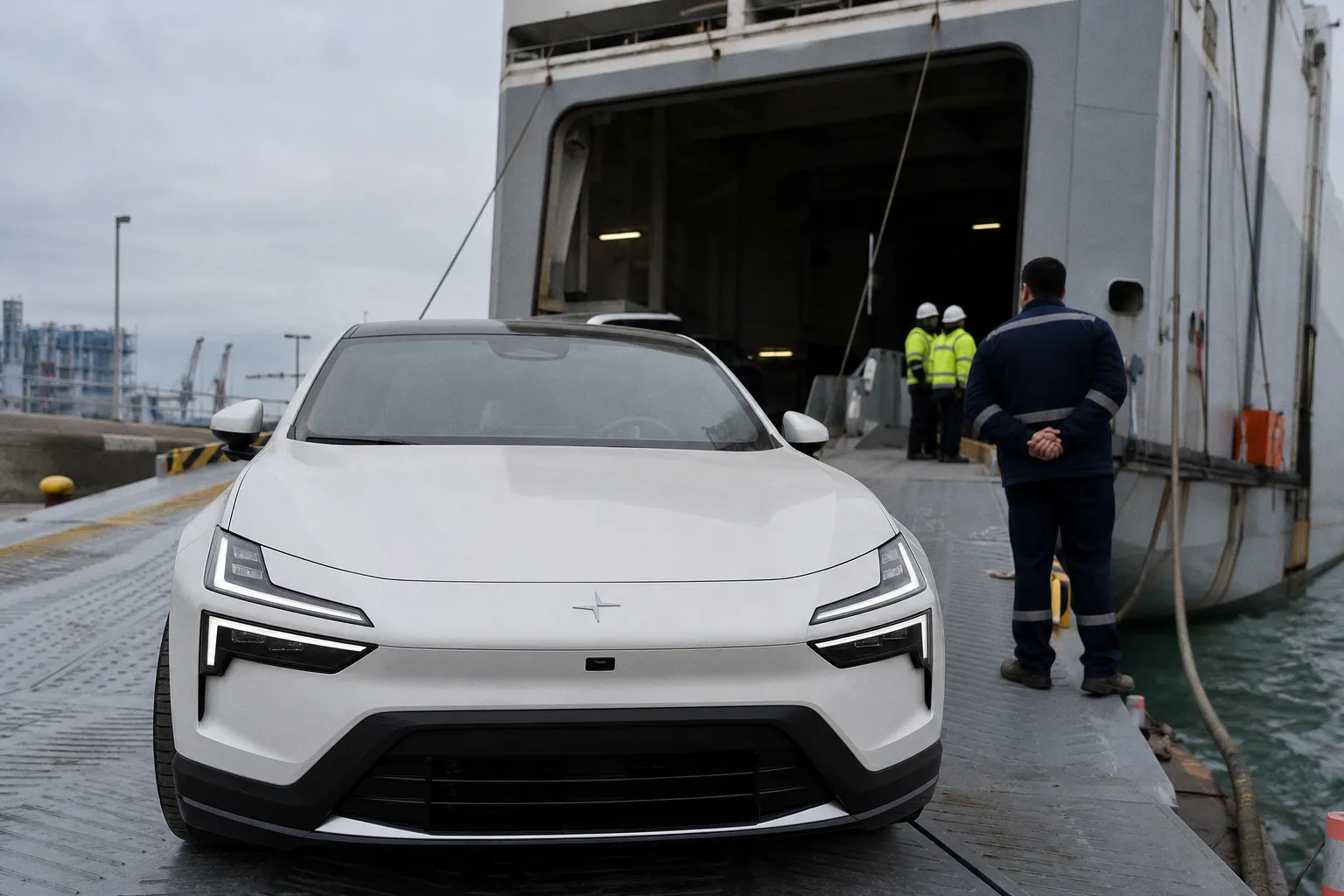
The U.S. government has shut Polestar out of its auto market, blocking the Chinese-owned electric vehicle maker from selling cars in the country on national security grounds. By published accounts, the action is being framed as a security matter.
Harrison Lockwood, Lead Columnist on Systemic Justice & Climate Action·updated June 29, 2026
Security Theater as Industrial Policy
The phrase "national security" in U.S. trade enforcement is rarely about secrets or soldiers. It is a jurisdictional incantation — a way to do what tariff schedules and procurement rules will not permit on their own. When a Chinese-owned EV brand gets frozen out, the operative effect is to shield domestic nameplates from a competitor that, on the available evidence, was selling — or preparing to sell — vehicles American consumers were interested in buying. The framing does not need to be substantiated in court, peer-reviewed, or even defended against contradiction. It only needs to be unrebuttable inside the press cycle, where the cost of questioning it outweighs the cost of repeating it. That is the whole mechanism, and it is working exactly as designed.
This is industrial policy conducted through security language, with the energy transition quietly underwriting the bill.
A Ban With Climate Costs
Every electric vehicle kept off American roads because of its country of origin is, in material terms, an internal-combustion vehicle that stays in service longer — or a dirtier substitute chosen by a buyer with one fewer option. The action contracts consumer choice precisely when the grid is starving for load growth, charging infrastructure is underbuilt, and automakers need scale to push unit costs down to the next tier of buyers. None of that is incidental to the decision. It is the decision.
This is the part the Beltway commentary tends to wave past. The moment decarbonization gets treated as a national-security adjacency, the climate strategy exists at the pleasure of the same apparatus that picks trade fights and writes supply-chain doctrine. They subordinate the climate math to the industrial math, which gets subordinated to the geopolitical math. Extraction all the way down. The cars we do not build are the emissions we do not avoid, and they show up as a line item no one is required to report.
What to Watch
Whether the measure extends to other Chinese-owned or Chinese-backed EV brands with a U.S. presence. Whether existing Polestar owners lose service access, parts, or software support — and whether any regulator is prepared to defend them. Whether federal EV credits and charger-build-out funding are quietly retuned to domestic-nameplate vehicles only. And whether a single legislator is willing to say, on the record, that decarbonization cannot survive being treated as a casualty of the new cold war. The next quarter will tell us whether this was a precedent — or just a headline.