UK Judges Begin Hearing Appeal Over Trinidad and Tobago Anti-Gay Law
A 1925 colonial statute that threatens five years in prison for consensual intimacy between men is, in 2026, still being defended with millions in taxpayer money.
Harrison Lockwood, Lead Columnist on Systemic Justice & Climate Action·updated July 09, 2026
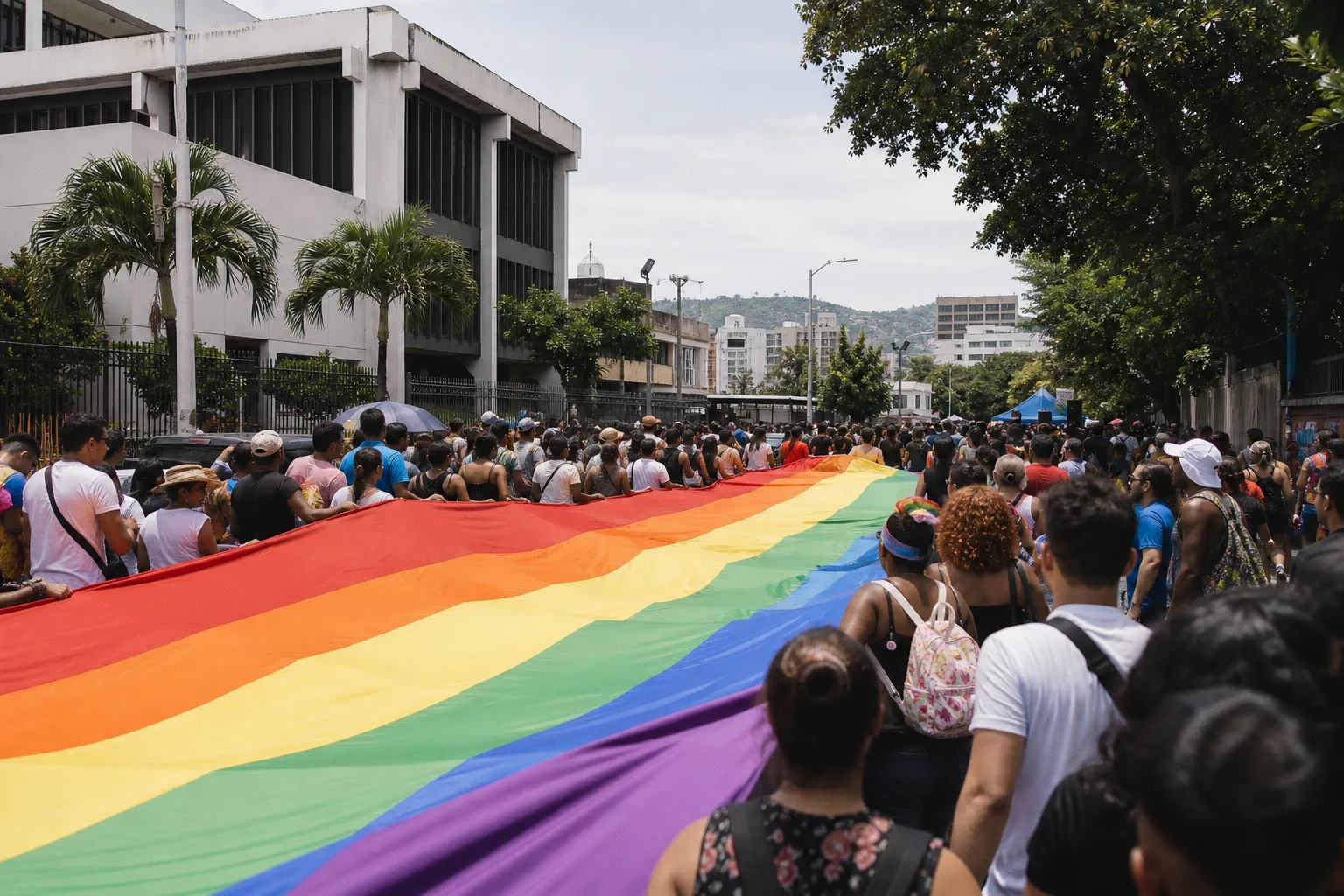
The Architecture of Preservation
Here's the structural mechanism doing the heavy lifting: "savings clauses." These provisions were written into Caribbean constitutions at independence — ostensibly to prevent a "wholesale gutting" of existing laws in light of new human rights protections. In practice, they function as legal amber, freezing colonial-era statutes in place and shielding them from constitutional challenge. Trinidad and Tobago's attorney general invoked exactly this logic to overturn Jones's 2018 victory, and Prime Minister Kamla Persad-Bissessar made the stakes explicit: this ruling will set precedent for every savings clause across the English-speaking Caribbean. The state isn't defending a single law. It's defending a framework that insulates an entire architecture of colonial extraction from democratic accountability.
A Region Watching — And Moving
Jones, 61, has been fighting this for nearly a decade. His frustration is material, not rhetorical: parliament could have repealed the law at any point. Instead, the state chose litigation. Meanwhile, the regional picture is shifting — Barbados, Dominica, St Lucia, and Antigua and Barbuda have all struck down similar statutes in recent years. The Bahamas acted back in 1991. But five nations, including Trinidad and Tobago, Jamaica, and Guyana, still criminalise consensual same-sex acts. The Privy Council's decision, expected within three to six months, will determine whether savings clauses remain an effective veto on constitutional rights — or whether the colonial legal inheritance finally loses its grip. Jones says he's confident in his case. The question is whether the system that produced these laws will dismantle them, or continue to reproduce its own complicity.