California EV Market Growth Defies Federal Policy Rollbacks
19.1%. That’s the share of new vehicles sold in California last quarter that were zero-emission. A number that should be a footnote in an inevitable transition now reads as an act of defiance.
Harrison Lockwood, Lead Columnist on Systemic Justice & Climate Action·updated July 22, 2026
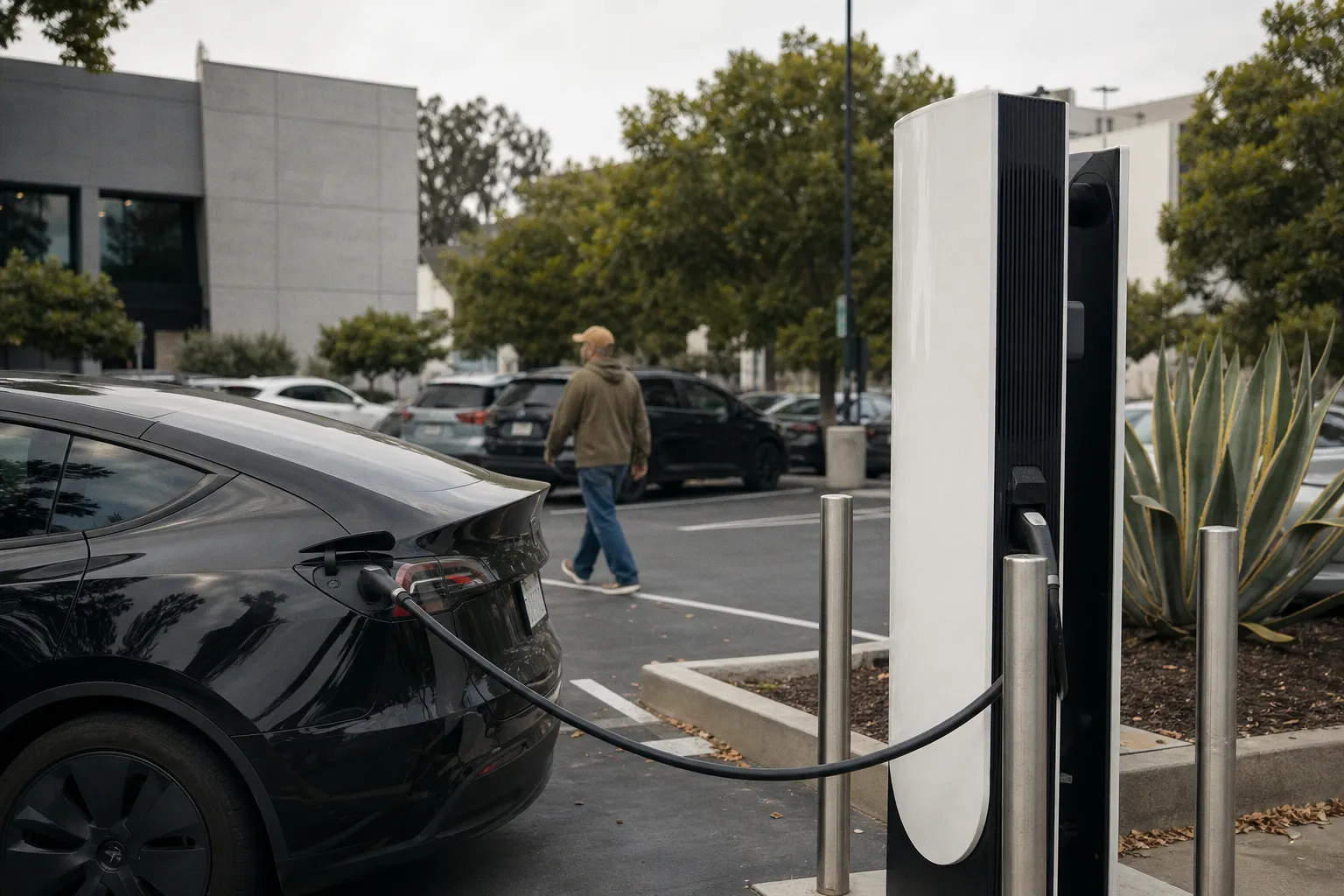
The California Energy Commission released these figures on July 20th, 2026. They demonstrate a market that continues to accelerate toward electrification even as the federal government systematically dismantles the tax credits and policy frameworks designed to support it. This isn’t just a sales report; it’s a ledger of resistance, proving that state-level policy and consumer choice can create material conditions that outpace federal sabotage.
The Mechanics of Defiance
Let’s be precise. The federal rollback of EV tax credits wasn’t an accident or a budgetary necessity. It was a policy choice with a clear beneficiary: the legacy auto and fossil fuel extraction complex. The move was designed to create market friction, to slow the transition by making the upfront cost of an electric vehicle artificially prohibitive for working families.
California’s market just absorbed that shock. The 19.1% figure isn’t despite the federal policy; it’s a direct measurement of its failure. The state’s own incentive programs, building codes mandating EV-ready homes, and its longstanding emissions waiver authority created a more resilient ecosystem. They built alternative leverage. This is what happens when political will isn’t entirely captured; you get divergence, a market moving in two directions at once.
The Global Policy Contradiction
While California defies federal austerity on clean transport, the European Union is busy dismantling its own climate enforcement. On the same day the California numbers dropped, the EU Commission issued recommendations to effectively pause penalties for violating its new methane emissions rules.
The reasoning is pure, fossil-fuel-era logic: energy security concerns amid global volatility. The Commission is advising member states to suspend financial penalties for non-compliance between 2027 and 2029, even while keeping the nominal obligations on the books. This creates a de facto amnesty for oil and gas importers. It’s the classic playbook: pass a regulation to claim climate leadership, then gut its enforcement mechanisms the moment it inconveniences the extractive industries whose supply chains it’s meant to regulate. They’re protecting the very system the rule was meant to constrain.
What This Actually Tells Us
These two stories, an ocean apart, are the same story. They reveal the central contradiction of our moment: the technology and the policy tools for rapid decarbonization exist, but they are perpetually held hostage by the power structures of the incumbent system.
California shows that subnational actors can build parallel structures of material change—the manufacturing base, the charging infrastructure, the consumer norms. The EU shows how easily even modest regulatory pressure on fossil fuels collapses under the first whisper of a crisis, real or manufactured. The market is advancing. The politics are retreating. The gap between the two is where the damage gets done.
The fight isn’t about convincing people EVs are good. It’s about dismantling the political and economic architecture that makes their adoption a struggle. California is winning that fight locally. The EU just demonstrated, on the global stage, why the struggle is so brutally difficult everywhere else.