Commission and ILO renew partnership for social justice and quality jobs
The European Commission and the International Labour Organization just renewed their strategic partnership on social justice and quality jobs, and the language is predictably soaring.
Harrison Lockwood, Lead Columnist on Systemic Justice & Climate Action·updated July 10, 2026
Notice the pairing. Not resilient and just — resilient and competitive. That word choice tells you everything about whose material conditions this framework is ultimately designed to serve.
The Architecture of Aspiration
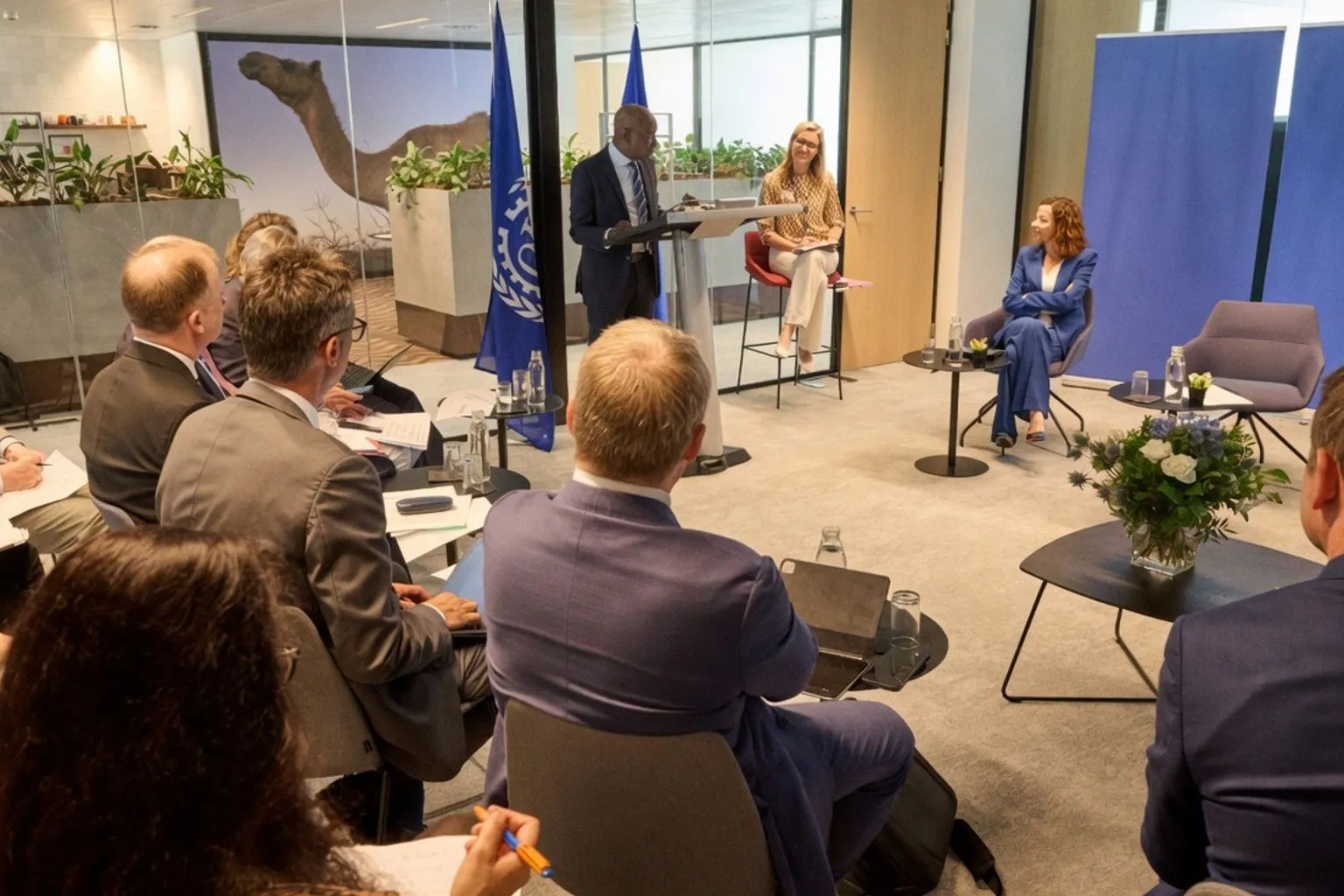
The renewal builds on a 2021 Exchange of Letters, co-chaired by Mînzatu and ILO Director-General Gilbert F. Houngbo. Three roundtables shaped the agenda: AI in the workplace, trade that respects international labour standards, and global development challenges. The communiqué stresses that artificial intelligence "must be human-centred" and that trade respecting labour standards "can improve working conditions and support sustainable development."
These are fine aspirations. But aspiration without enforcement is a press release. The ILO possesses no binding enforcement mechanism over sovereign states or multinational corporations. The Commission, for its part, continues to negotiate trade agreements where labour protections function as aspirational annexes rather than enforceable clauses. Partnership language costs nothing. Workers in extractive supply chains pay the actual price — a gap between rhetoric and wages that bond markets track far more closely than policymakers admit.
'Just Transition' Means Nothing Without Binding Mechanisms
The phrase "just transition" appears repeatedly in the renewed framework, paired with social protection, skills development, and resilient labour markets. Houngbo framed the next chapter as "translating shared values into concrete action that expands access to decent work."
Concrete action requires concrete funding. It requires binding labour standards embedded in trade deals with real penalties for non-compliance. It requires dismantling the classification structures that let platform corporations across Europe call workers "independent contractors" while extracting full-time labour at part-time protections. None of this is detailed in the renewal document. When the Commission speaks of making the "twin transition" — green and digital — a "fair transition," the operative question remains: fair to whom? Capital restructures first. Workers absorb the shock second. That is not a transition. That is extraction by another name.
What to Watch Instead of the Press Release
The real test of this partnership isn't in Geneva conference rooms or Brussels roundtables. It is in the material conditions of workers who exist at the bottom of the supply chains this rhetoric claims to protect. If this renewed cooperation produces binding mechanisms — enforceable labour clauses in EU trade agreements, penalties for corporations that violate fundamental rights at work, funded social protection floors in developing economies — it will matter. If it produces another round of roundtables, it is architecture without enforcement, which is precisely what multilateral labour governance has been for decades.
Track the next cycle of EU trade negotiations. Watch whether ILO standards appear as binding commitments or decorative language. The answer will tell you whether this partnership is leverage or theatre — and whether "social justice" in the mouths of institutions that govern global capital is anything more than a managed release valve for systemic pressure.