Dry weather and drought in England: 2 to 9 July 2026
Four water companies imposing hosepipe bans in a single week isn't a weather event. It's the material consequence of a system designed to extract profit from a public resource, now failing under predictable climatic stress.
Harrison Lockwood, Lead Columnist on Systemic Justice & Climate Action·updated July 13, 2026
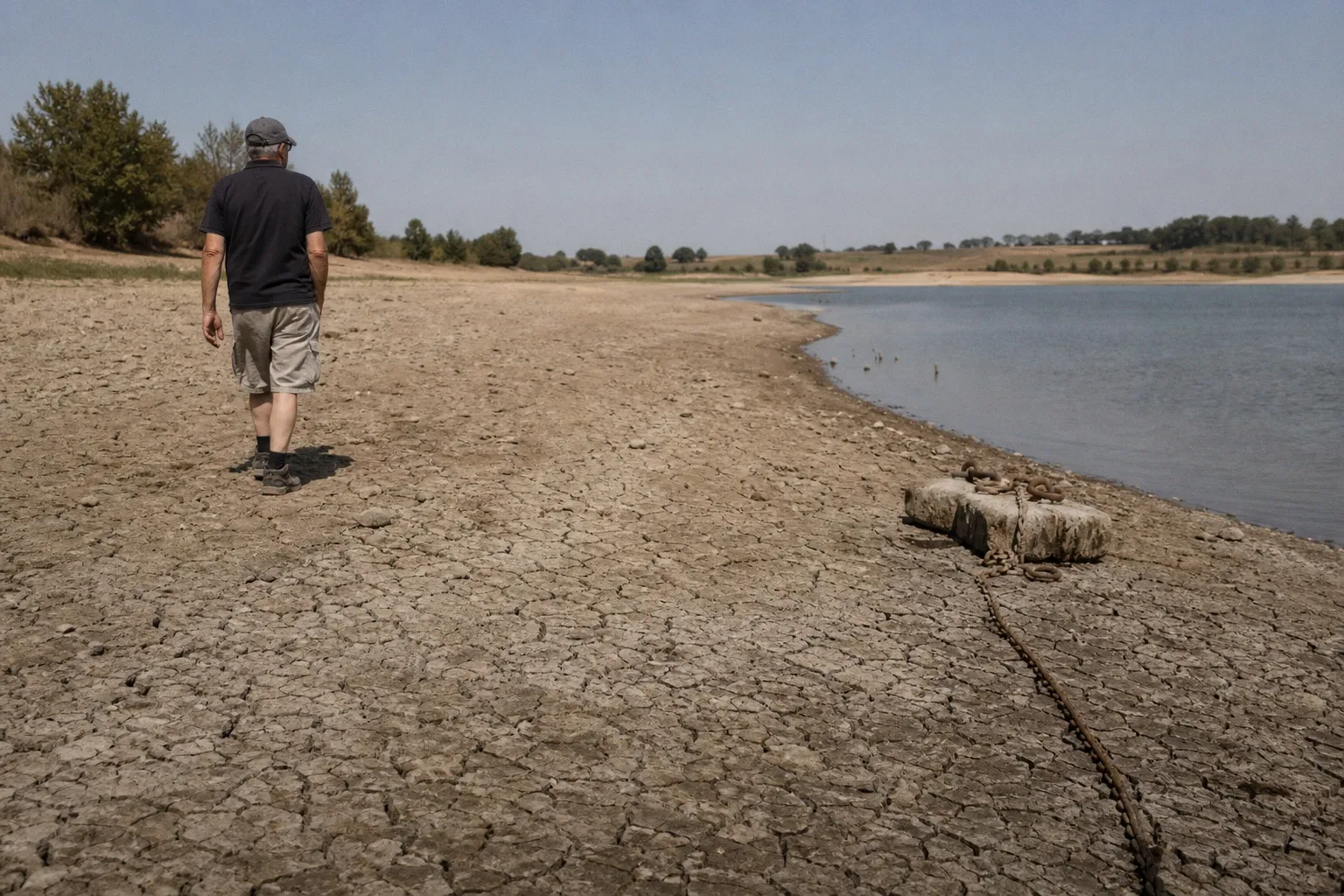
Corporate Water, Public Shortage
The bans, officially termed Temporary Use Bans (TUBs), roll out like dominoes: South East Water in Kent, then Southern Water across Hampshire and the Isle of Wight, followed by Anglian Water and Affinity Water. The official language of "managing demand" obscures the leverage point. These are companies that have overseen systemic infrastructure underinvestment and relentless abstraction for decades. The bans are a rationing mechanism that falls on households, not on the core business model of commodifying water. The Environment Agency, meanwhile, escalates its "drought response" to a meeting-a-month pace—a bureaucratic heartbeat mismatched to the speed of depletion.
The Agricultural Canary
While the urban taps face restriction, the countryside bears the immediate, material brunt. The government's own assessment confirms winter storage reservoirs for agriculture are "declining rapidly," forcing more abstraction restrictions just as demand for irrigation and livestock water spikes. The outcomes are already logged: a cereal harvest starting early under stress, spring crops failing from a dry season, and livestock farmers in East Anglia reporting a lack of forage. This isn't an inconvenience; it's a direct hit to the material conditions of food production and rural livelihoods, exposing the fragility of an industrial agriculture system built on the assumption of consistent water.
What We Should Be Watching
The next moves will reveal who is truly protected. We must track the dividends and executive compensation of the water companies implementing these bans. We need to see if abstraction licences for large-scale agriculture and industry are restricted with the same immediacy as household hosepipes. The National Drought Group, convening monthly, will produce minutes. Let's see if they discuss systemic water retention investment or merely reinforce the austerity playbook of public rationing. The drought isn't a natural disaster; it's a stress test of a system. The cracks it reveals are in the infrastructure of extraction, not in the clouds.