Stop Blaming the Weather for Europe's Wildfire Tragedies
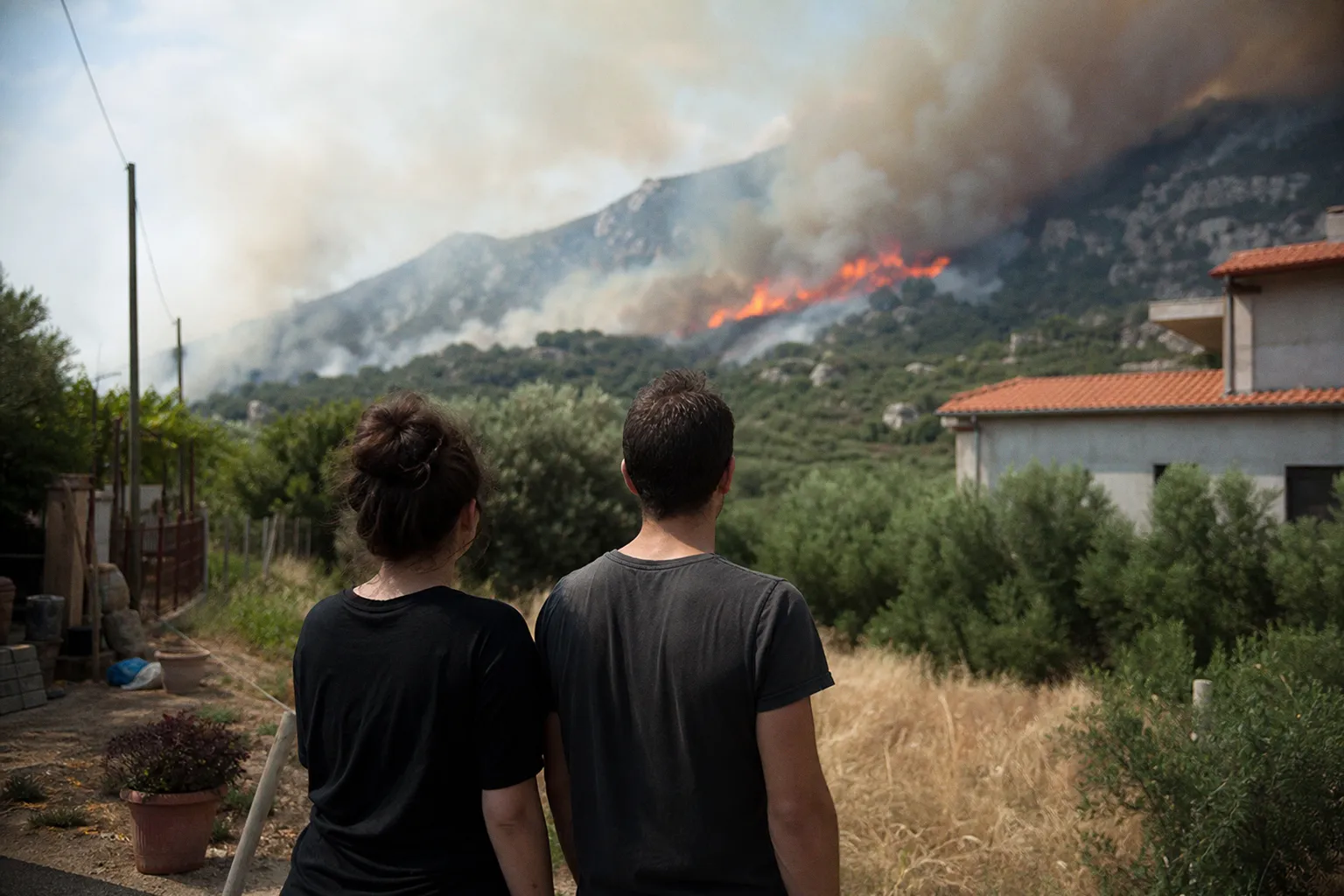
Twelve people are dead in Spain, and the global press has already pinned it on a heatwave. This narrative—that we are helpless against the weather—is not just lazy. It is a cover for decades of catastrophic policy failure.
Harrison Lockwood, Lead Columnist on Systemic Justice & Climate Action·updated July 12, 2026
The Fuel Load We Built
For thirty years, European policymakers have operated under a destructive fantasy: that letting nature “be” on abandoned rural land is restoration. It isn’t. It’s creation of a tinderbox. As rural populations migrated to cities, agricultural land and managed forests were left to grow wild. Without traditional grazing, controlled burns, or biomass harvesting, the forest floor becomes a dense, highly flammable undergrowth—what fire scientists call fuel load. When a spark hits, this man-made accelerant does the rest.
The resource allocation is the smoking gun. When 95% of the budget goes to suppression—the optics of red planes dropping water—and a mere 5% to prevention like clearing brush and creating fuel breaks, you’ve already lost. The Spanish forestry sector has screamed about this imbalance for a decade. Politicians prefer the spectacle of crisis response over the unglamorous work of systemic maintenance in January.
The Architecture of Casualty
People don’t die in wildfires because they’re trapped deep in a remote forest. They die because we’ve allowed residential developments to bleed into what fire ecologists call the Wildland-Urban Interface (WUI) without enforcing any basic safety standards. We build luxury subdivisions in dense pine forests on steep slopes with only one narrow road out. We let homeowners cultivate thick vegetation up to their wood-shingled porches.
This isn’t a natural disaster. It’s the result of extraction—of value from land without investing in its resilience—and austerity in public safety budgets. We’ve constructed a landscape of vulnerability and then called the inevitable outcome an act of God.
The Weather Is a Distraction
The same misdirection plays out on a planetary scale. As we focus on the immediate heat, long-range data warns of a potentially disrupted Polar Vortex for Winter 2026/2027, driven by a building Super El Niño and other global signals. This isn’t just a forecast curiosity. A weakened vortex can spill Arctic air into mid-latitudes, creating wild swings in weather patterns.
Yet we’ll likely treat that, too, as an isolated anomaly. The structural critique is the same: our systems are optimized for short-term extraction and reaction, not for stability in a destabilized climate. We refuse to fund the preventative measures that buffer communities—from firebreaks to resilient grid infrastructure—and instead cycle through crises, blaming the weather each time.
The call to action isn’t to fear the heat or the cold. It’s to stop accepting the narrative that frames these tragedies as unavoidable. They are the direct material conditions created by specific policy choices. The first step is dismantling the myth of the weather’s fault.