Trump administration repeals crucial part of Endangered Species Act
Fifty years of habitat protections — the single most effective firewall between American wildlife and extinction — just got torched.
Harrison Lockwood, Lead Columnist on Systemic Justice & Climate Action·updated July 11, 2026
The architecture of the gut job
Since 1973, the ESA treated "harm" expansively: destroying or modifying critical habitat counted as killing the species that depended on it. The Supreme Court backed that reading in 1995, ruling in favor of old-growth forest protections for the endangered spotted owl. That interpretation is what kept 99% of listed species from going extinct — a track record no other piece of American environmental law can claim.
The new rule collapses the definition back to direct physical harm to individual organisms. Habitat modification — the conversion of wetlands, the fragmentation of migration corridors, the clear-cutting of nesting grounds — is no longer a violation. This isn't a technical adjustment. It removes the load-bearing wall from the statute.
The agencies received hundreds of thousands of public comments opposing the change. They proceeded anyway, recasting the habitat protections as "regulatory intrusion" on private property rights. The democratic input was processed and discarded in the same bureaucratic motion.
Who benefits, who pays
Follow the leverage. Development interests — timber, mining, agribusiness, commercial real estate — have lobbied against habitat protections for decades because compliance slows projects and costs money. This rollback converts ecological debt into private profit. Every parcel of previously protected habitat is now a potential site for extraction without federal consequence.
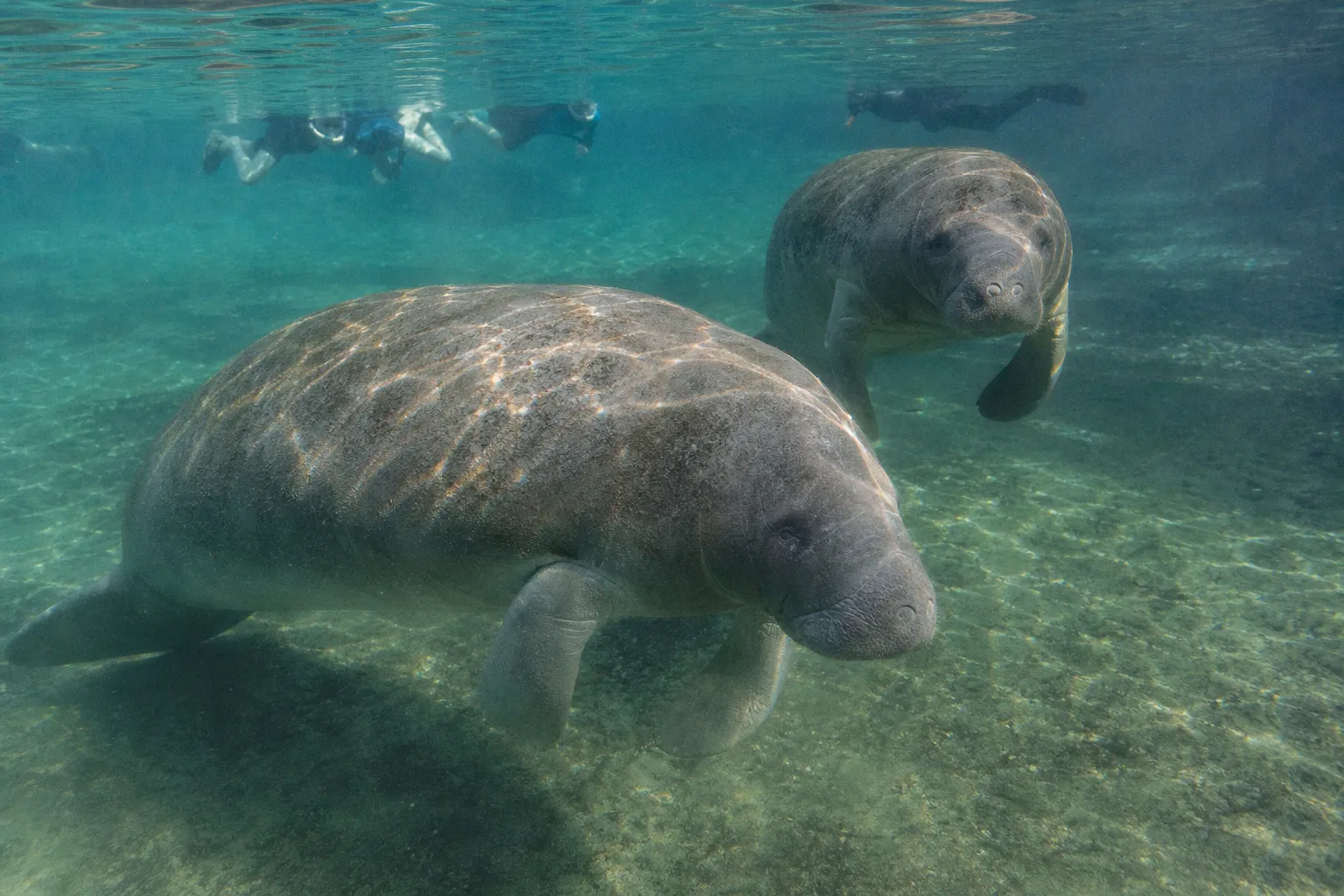
The species footing the bill aren't abstract. Wolverines, monarch butterflies, Florida manatees — all already on the brink, all now stripped of the one legal mechanism that forced developers to account for the ground beneath their feet. As Earthjustice attorney Kristen Boyles put it, this is the first time an administration has formally claimed that endangered species shouldn't be safe from the modification of the places they "live, raise their young, or search for food."
The timing compounds the damage. Roughly one million species face extinction globally, according to IPBES assessments — 40% of amphibians, a third of marine mammals and reef-building corals. Insects, the structural foundation of nearly every terrestrial ecosystem, are in freefall, with an estimated 80% of species still undescribed by science. Some vanish before they're even named. Stripping habitat protections during an extinction emergency isn't negligence; it's a policy choice with a body count.
What the numbers actually defend
Eighty percent of registered voters support full funding of the ESA. Seventy-three percent consider biodiversity relevant to their daily lives. The public consensus isn't ambiguous — it's overwhelming. The administration overrode it anyway, which tells you exactly whose material interests this rule serves.
Habitat loss isn't a secondary threat to species survival. It is the primary driver. Remove the habitat protection, and you don't just endanger individual animals — you trigger the domino effect that collapses interconnected ecosystems. The loss of one species destabilizes every species that relied on it, cascading through food webs in ways that regulators who think in quarterly cycles are structurally incapable of modeling.
What we're watching is the dismantling of a legal architecture that took half a century to build, executed in a single administrative stroke to clear the path for extraction. The ESA was never radical. It was the bare minimum — and even that was too much for an administration that treats public land and living ecosystems as obstacles to profit margins. The question now isn't whether biodiversity will suffer. It's how much irreversible damage gets done before the political calculus shifts back — and whether the species we're sacrificing to development can survive the wait.