Column | America’s electric RV revolution is now underway
The Washington Post has put a blunt marker down: America’s electric RV revolution is now underway. That is not, by itself, proof that the road-trip economy has been decarbonized, or that a heavily extractive auto system has suddenly found virtue.
Harrison Lockwood, Lead Columnist on Systemic Justice & Climate Action·updated July 14, 2026
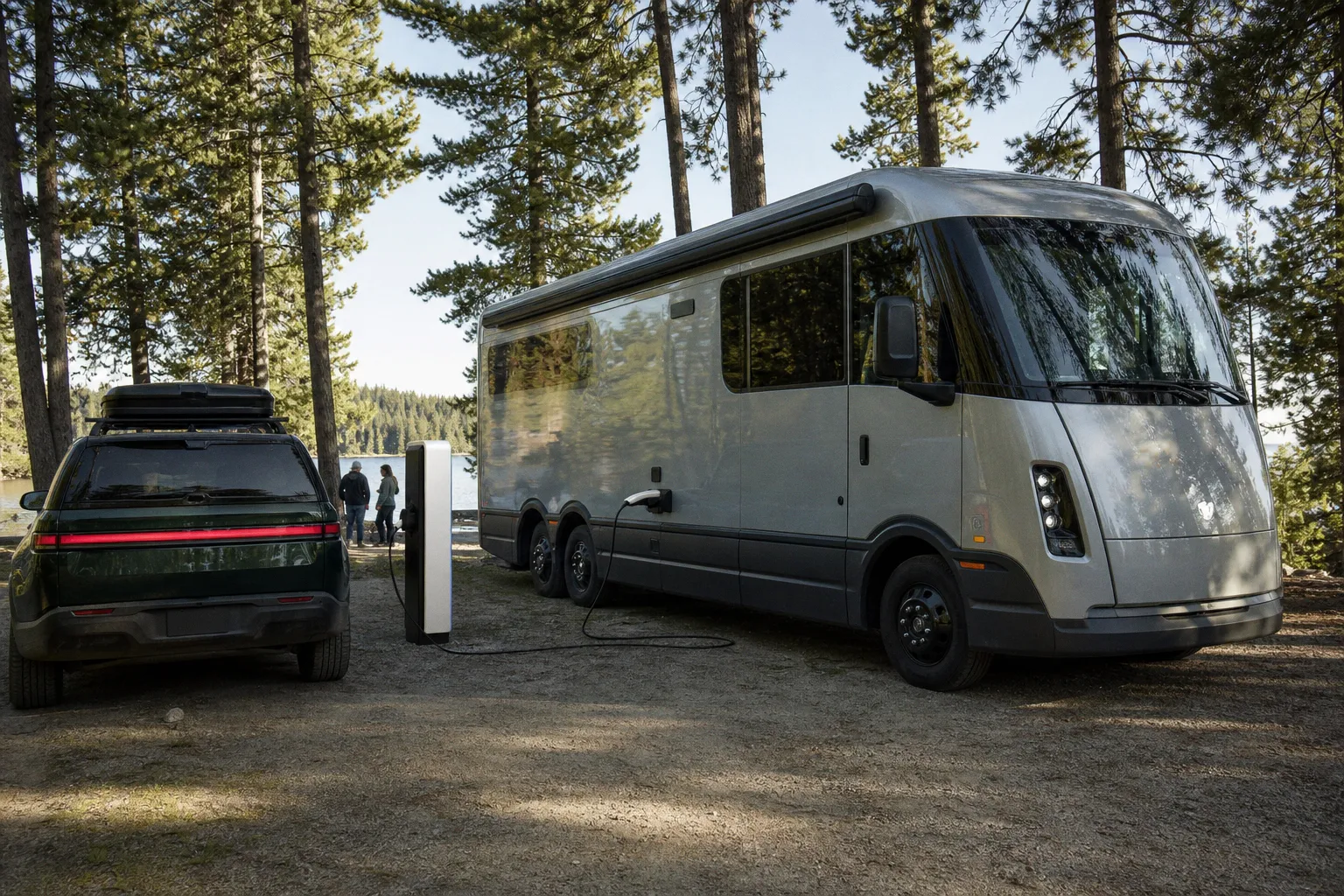
The RV is becoming a climate test case
Electric cars have already forced a public argument over batteries, charging, grid capacity, labor, subsidies, and corporate greenwashing. Electric RVs bring all of that into a harder category.
An RV is not just a commuter vehicle. It is larger, heavier, and built around distance, comfort, and consumption. So when a major national outlet says the electric RV shift is underway, we should read that as more than a lifestyle trend. It signals that electrification is pushing beyond the easy marketing images and into the material contradictions of American mobility.
That matters because the RV sits at the intersection of aspiration and infrastructure. It sells freedom, but freedom on wheels still depends on public roads, energy systems, manufacturing supply chains, and the ability to charge where people actually travel. If electric RVs are going to be more than a luxury badge for early adopters, the question is not whether the branding looks clean. The question is who builds the system beneath it, who pays for it, and who gets left waiting at the plug.
Don’t confuse a market signal with justice
The confirmed fact here is narrow: The Washington Post has published a column framing America’s electric RV revolution as already underway. The snippet does not give us models, prices, sales figures, charging details, or policy mechanisms. So we should not pretend we have them.
But the political stakes are already visible in the category itself. Electrification can cut tailpipe pollution, yet it can also reproduce the same hierarchy that shaped the fossil-fuel economy: public investment socialized, private profit captured, working-class access postponed. A cleaner machine inside an unchanged system does not automatically deliver climate justice.
That is the trap with every “revolution” sold through consumer hardware. Companies get to present a product launch as progress. Politicians get to gesture at modernization. Meanwhile, the hard questions — grid planning, public charging, battery sourcing, repair access, labor standards, rural infrastructure — get treated as technical footnotes rather than power struggles.
We should reject that framing. If electric RVs are becoming real, then the fight starts now over the conditions of that reality.
What to watch before buying the story
For readers, the practical move is not to cheer or sneer. It is to interrogate.
Watch whether electric RV coverage gives you measurable facts or just atmosphere. Does it explain charging limits in plain terms? Does it tell you who can afford the vehicle? Does it address where charging will exist outside wealthy travel corridors? Does it discuss maintenance and repair, or only the showroom fantasy? Does it mention public policy, or pretend consumer choice alone can rewire transportation?
Also watch the language. “Revolution” can describe a genuine structural shift. It can also launder a business strategy. The difference lies in material outcomes: lower pollution, broader access, decent work, resilient infrastructure, and less dependence on fossil extraction — not just a new premium product for people already insulated from the worst of the climate crisis.
The electric RV may indeed be arriving. Fine. Then we should demand more than novelty. We should demand a transition that does not turn climate action into another gated amenity.