Indigenous Leaders Demand Sovereignty Over AI Data Center Development
According to Mongabay, Indigenous leaders and experts used a U.N. meeting to insist that AI data-center projects respect free, prior and informed consent—not merely after-the-fact consultation—when Indigenous lands, waters and knowledge are at stake.
Harrison Lockwood, Lead Columnist on Systemic Justice & Climate Action·updated July 22, 2026
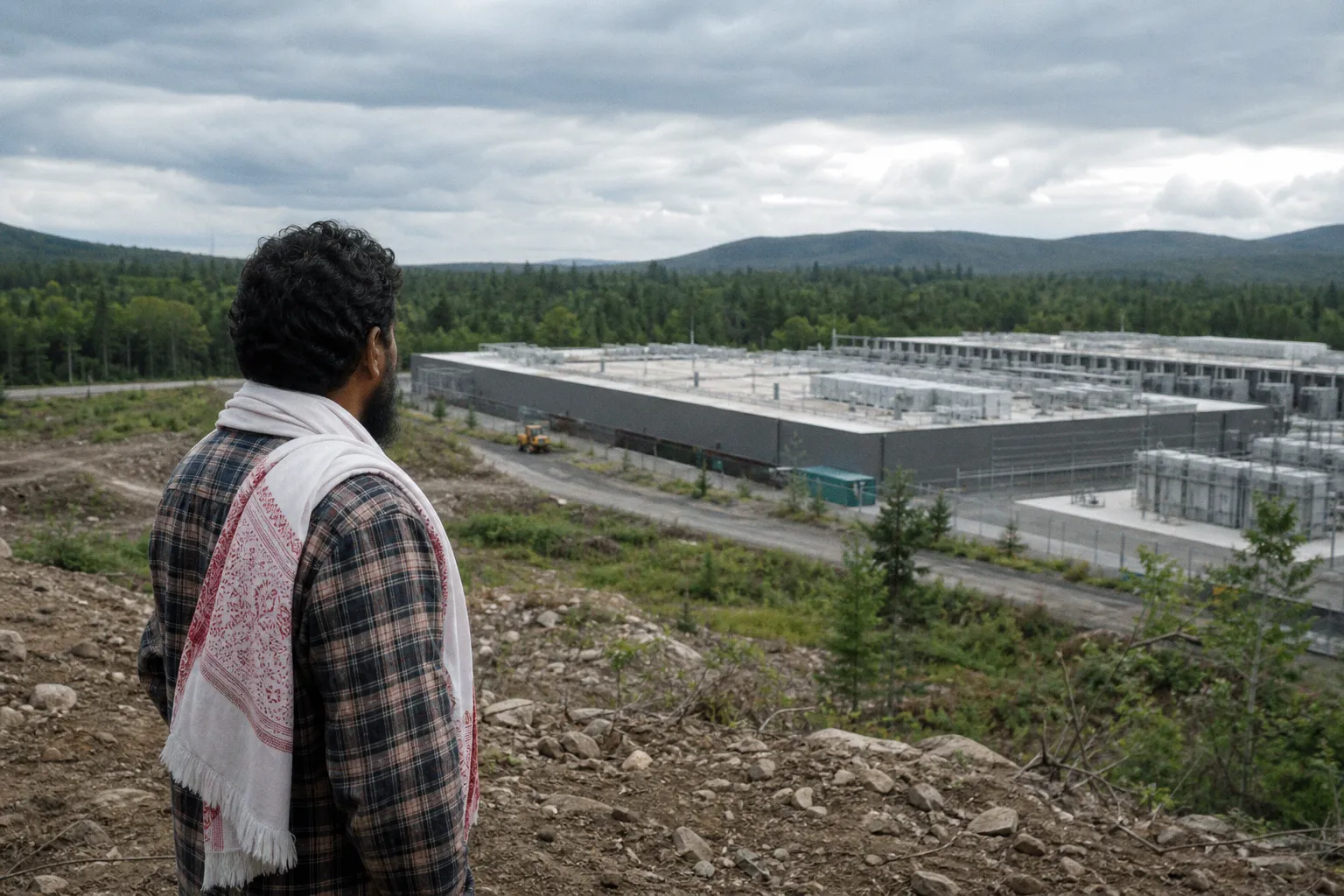
That demand cuts through the polished mythology of “the cloud”: AI is physical infrastructure, and its costs are being routed through territories that corporations have long treated as expendable.
The central issue is not whether data centers can be made marginally less wasteful. It is who gets to decide whether they arrive at all, and who carries the consequences when they do.
Consent cannot be a box-ticking exercise
At the U.N. Expert Mechanism on the Rights of Indigenous Peoples meeting, delegates and experts called for consent protections around both land and knowledge. That pairing matters. AI infrastructure requires vast sites, electricity networks and water, while AI systems can also extract Indigenous knowledge without permission.
Maren Storslett of Norway’s Sámi Parliament told the meeting that large data centers are already placing immense pressure on Sámi territories. The choice of language—priorities and limits—is the point. Governments and technology firms routinely frame these projects as inevitable, then offer communities a narrow chance to comment on the route of extraction.
Free, prior and informed consent reverses that script. It means affected peoples must have a meaningful say before development decisions harden into permits, contracts and construction schedules. Anything less is leverage masquerading as participation.
AI’s resource bill is already enormous
The material scale should end the fiction that AI floats above the planet. Mongabay reports that conventional data centers may draw roughly 10 to 25 megawatts of power, while hyperscale AI-focused sites can reach 100 megawatts or more. Those facilities also require large volumes of water to operate servers and the energy systems that sustain them.
In the United States, Lawrence Berkeley National Laboratory estimated that data centers directly consumed about 66 billion liters of water in 2023, with energy generation for those centers consuming far more indirectly. The expected growth in data-center electricity demand turns every new project into a fight over land, water and public infrastructure—not simply a technical upgrade.
That is why consent is not a procedural add-on to climate policy. It is a protection against a familiar development model: private firms claim the revenue, while communities absorb the scarcity, disruption and political pressure.
Repression is part of the same development model
The demand around AI data centers lands alongside another warning. REDD-Monitor reports that U.N. experts and human-rights organizations have called for the release of Indigenous activist Pranab Doley and others arrested after protests against a planned luxury hotel project on ancestral lands near Kaziranga National Park in India.
The projects differ; the governing pattern does not. When communities contest land acquisition or development, authorities can treat the resistance as an obstacle to be managed rather than a rights claim to be respected. U.N. experts reportedly urged authorities to suspend development until affected Indigenous communities have been meaningfully consulted and their free, prior and informed consent obtained.
We should watch whether governments translate these principles into enforceable requirements before permits, subsidies and grid commitments lock projects in. The same test applies wherever capital asks the public to trust its next infrastructure boom—whether in server farms or in the expanding machinery of financial speculation, where even a significant step in crypto regulation does not substitute for democratic control over real-world harms.