Mutual aid society efficiency: debunking the charity myth
A July 2026 analysis across Myanmar, Nigeria, Sudan, and Ukraine found local NGOs to be 10–19% more efficient and 13–21% more cost-efficient than UN agencies in delivering programs.
Harrison Lockwood, Lead Columnist on Systemic Justice & Climate Action·Updated: July 23, 2026·13 min read
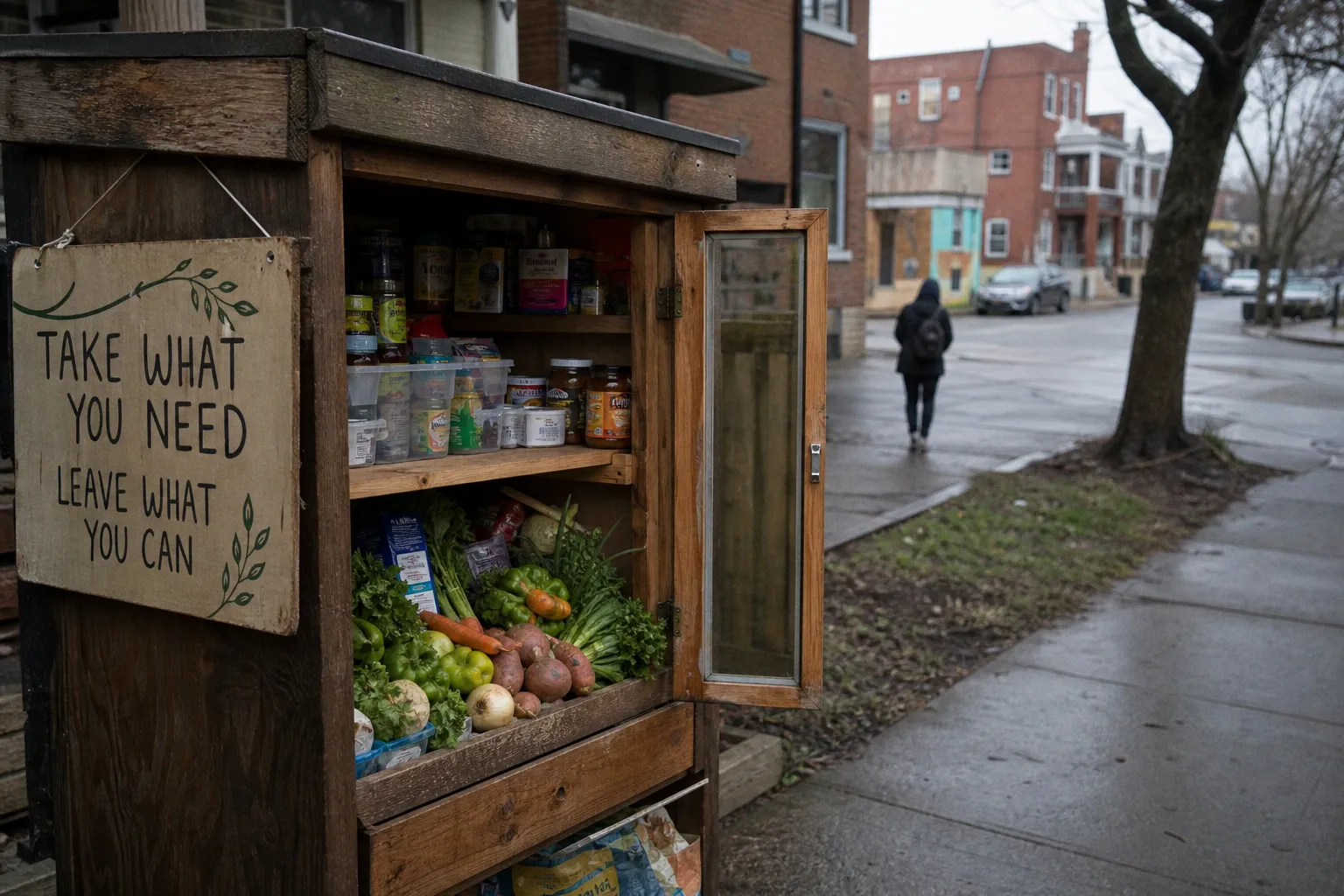
Yet the institutions that monopolize humanitarian funding still behave as if local people are a risky subcontractor to be managed rather than the people already doing the work.
That inversion is not an administrative glitch. It is the operating logic of aid: money moves upward through international payrolls, compliance departments, consultants, branded campaigns, and executive layers before it moves back down—thinned out—to the communities facing hunger, displacement, illness, or disaster. Then donors call this pipeline “capacity.”
A mutual aid society starts from a more honest premise. People living through a crisis know what they need, know who has been excluded, and can act without forcing survival through a maze of eligibility tests. It does not mean local networks can replace a public welfare state, nor can a neighborhood grocery fund suddenly supply the infrastructure needed after a major cyclone. That is not the argument. The argument is that top-down charity has used its own inefficiency to justify retaining control.
And the numbers are increasingly refusing to cooperate with that story.
The efficiency gap is a power gap
The phrase “efficiency” gets abused by people who mean cutting services, freezing wages, or making desperate people perform gratitude for a donor’s annual report. That is not what the evidence on local aid shows.
The Share Trust’s 2026 analysis examined delivery across four conflict- and crisis-affected countries. Local NGOs did not outperform international agencies because they had discovered a magical way to eliminate costs. They outperformed them because they did not need to recreate local knowledge from an office thousands of miles away.
They already knew which roads had become impassable. They knew which families avoided official distribution points because of documentation status, gender restrictions, ethnic discrimination, or fear of authorities. They knew the local prices, the informal supply chains, the trusted translators, the neighborhood disputes, and the people who would be left off a spreadsheet-driven list.
International agencies often have to purchase that knowledge after arriving. Local organizations live with it.
The broader funding figures expose the contradiction. In 2018, less than 1% of $187 billion in Official Development Assistance went directly to local actors. In 2021, local and national NGOs received just 0.4% of humanitarian aid directly. The aid system talks endlessly about localization while preserving a financing architecture designed to route money through large international institutions.
A 2022 model known as Passing the Buck put a price on that architecture. Shifting 25% of ODA to local intermediaries would make programming 32% more cost-efficient, with estimated annual savings of $4.3 billion from reducing international overhead and salary costs.
That is not a rounding error. It is enough money to reveal what the system has chosen to subsidize: not only food, medicine, shelter, or cash transfers, but the institutional privilege of deciding who is qualified to deliver them.
| What gets funded | Top-down charity model | Mutual aid society model |
|---|---|---|
| Decision-making | Donors, senior managers, external program designers | People affected by the material conditions |
| Access to support | Often conditional on documentation or compliance | Based on reciprocal, unconditional solidarity |
| Local knowledge | Collected through assessments and intermediaries | Already embedded in the network |
| Administrative structure | Formal reporting chains, international salaries, layered approvals | Lean coordination, direct communication, shared accountability |
| Political effect | Can preserve dependency and donor control | Builds collective capacity and organizing relationships |
None of this means paperwork has no place. Public money requires accountability. But accountability upward to a foundation officer is not the same thing as accountability outward to the people whose rent is overdue, whose medication has run out, or whose home has just flooded.
The central question is not whether communities have capacity. It is why powerful institutions keep charging them rent to use it.
How does a mutual aid society work when nobody is “in charge”?
Skeptics often imagine only two possible models: a formal charity with a board, a budget, and a tax number—or chaos. That is a remarkably convenient binary for institutions that benefit from treating informal solidarity as organizational immaturity.
A mutual aid society works through horizontal coordination. Members contribute what they can—money, time, transport, childcare, food, professional skills, information, physical space—and request what they need without being turned into a case file. The point is not that every participant gives equally. The point is that nobody’s right to survive depends on proving they deserve help to a gatekeeper.
In practice, a mutual aid network may use a shared spreadsheet, encrypted group chats, neighborhood phone trees, community kitchens, rotating volunteers, cash-transfer pools, or partnerships with trusted local shops. The tools vary. The underlying structure does not: resources circulate through relationships rather than descend through institutional hierarchy.
That distinction matters most when conventional aid turns deprivation into an audition.
Traditional charities frequently use means-testing: proof of income, citizenship, sobriety, job-search activity, household composition, residency, or other conditions that sort the “deserving” from the suspect. Such systems are often defended as safeguards against fraud. In reality, they routinely impose the greatest administrative burden on people with the least time, safety, internet access, language fluency, or documentation.
Mutual aid does not pretend exploitation disappears because a donation jar becomes a collective fund. Networks can reproduce internal hierarchies. They can burn out volunteers. They can mishandle conflict or lack technical expertise. Anyone claiming otherwise has confused a political commitment with a fairy tale.
But those limitations are arguments for resourcing grassroots infrastructure, training, and durable public services—not for handing power back to the very institutions whose overhead-heavy model has repeatedly failed to reach people fast enough.
A functioning mutual aid society usually depends on several disciplines:
1. Direct intake without humiliation. Requests must be easy to make and not built around proving moral purity. The network can verify urgent needs through trusted relationships without converting every crisis into an interrogation.
2. Transparent circulation of funds and goods. People need to see where money goes, what demands exceed supply, and how decisions are made. Transparency is not a glossy annual report; it is legibility to the people affected.
3. Distributed responsibility. A network cannot rest on one exhausted organizer holding every password, vendor contact, and emotional burden. Rotating roles and shared access are survival mechanisms.
4. Political education alongside relief. Mutual aid meets immediate needs, but it also names why those needs exist. A rent fund that never identifies landlord power remains vulnerable to becoming charity with better branding.
5. Links to institutions that can be forced to deliver. Mutual aid can bridge a gap. It should not become an excuse for the state to abandon its obligations. The target remains universal housing, healthcare, income support, transit, and disaster protection.
Charity measures scarcity. Mutual aid organizes against it.
The sharpest difference in the mutual aid society vs charity debate is not merely organizational. It is political.
Charity tends to begin with a surplus holder: a wealthy donor, corporation, foundation, or institution deciding how much of its accumulated wealth it will return and on what terms. The recipient receives assistance, but the donor retains leverage. Even the kindest charity operates inside that imbalance unless it actively relinquishes control.
Mutual aid begins with shared exposure to a system that has made basic survival precarious. The person delivering groceries today may need rent support next month. The neighbor coordinating prescriptions may later need childcare. Reciprocity does not mean every exchange balances neatly. It means no one is cast permanently as the benefactor and no one permanently as the beneficiary.
This is why corporate philanthropy finds mutual aid so uncomfortable. Corporations can sponsor food drives while suppressing wages. They can fund climate resilience projects while extracting wealth from communities made vulnerable by fossil fuel infrastructure, toxic logistics corridors, or unaffordable housing. A donation helps manage the symptoms; structural change threatens the business model.
The same logic appears in media and promotion. Corporate systems can turn even a global digital promotion network expansion into a story of reach, scale, and market penetration. But community organizers know that reach without control is not power. A message that travels globally can still leave the people creating it without ownership, safety, or material support.
Mutual aid refuses the spectacle of benevolence. It asks who has resources, who controls distribution, who gets excluded by the rules, and what collective power can change those rules.
That is why opponents often reduce mutual aid to sentimentality. It is easier to mock a neighborhood donation network than to confront the fact that it may reveal how little a government, employer, landlord, or humanitarian bureaucracy has done.
Mutual aid is not a softer version of austerity. It is evidence that people are already doing the work institutions claim requires their control.
The 2025–2026 evidence measures more than groceries
The clearest mutual aid society examples often look ordinary: neighbors delivering food, picking up prescriptions, raising emergency cash, sharing translation support, checking in on isolated residents, coordinating rides. Critics see these acts and ask whether they can scale.
They are asking the wrong question first.
Before asking whether a mutual aid network can replicate the capacity of a national welfare system, we should ask why governments with tax bases, statutory authority, and professional agencies leave people dependent on volunteer grocery runs in the first place. Mutual aid fills holes created by austerity; it does not drill them.
Still, the recent research gives us a clearer view of what these networks produce. A December 2025 ALNAP report synthesized more than 200 documents from 25 countries. Its conclusion cut against the standard donor suspicion of informal groups: supporting mutual aid can improve inclusion, cost-efficiency, and accountability.
The research does not claim that every decentralized group is automatically effective. It identifies a more basic reality: informal structures can reach people formal systems miss precisely because they are not trapped inside the formal system’s filters.
A 2026 University College London study of COVID-19 mutual aid groups also showed what gets lost when efficiency is reduced to a balance sheet. Seventy-four percent of volunteers shopped for groceries, 46% collected prescriptions, and 48% formed new personal or professional connections through their participation.
That last number deserves more attention than it usually gets. Nearly half of participants built new connections. In policy language, that is social capital. In plain language, it is the difference between facing a crisis alone and knowing who will answer a message, share information, watch a child, give a ride, translate a form, or stand beside you at a city council meeting.
This is the infrastructure austerity cannot easily quantify and cannot afford to tolerate. Isolated people are easier to govern through fear, debt, policing, and bureaucratic delay. Connected people compare notes. They identify patterns. They organize.
A mutual aid society therefore creates two forms of resilience at once:
- Immediate resilience: food arrives, medication is collected, utilities are kept on, a displaced family gets cash without waiting weeks for approval.
- Collective resilience: people develop trust, communication channels, practical skills, and a shared analysis of the conditions harming them.
The first keeps people alive. The second makes it harder for power to keep treating their survival as optional.
Why donors still starve local networks of money
If local organizations deliver aid more efficiently, and if mutual aid networks improve inclusion and accountability, why does the money still move through international bureaucracies?
Because funding is not distributed according to evidence alone. It follows institutional self-preservation.
Large donor systems prefer registered entities with familiar reporting formats, English-language applications, audited accounts, formal boards, and staff capable of absorbing compliance labor. Those requirements may look neutral from a headquarters office. They are not neutral in places where grassroots organizers are already working unpaid, where internet access is unreliable, where banking systems exclude people, or where registration can expose activists to surveillance and repression.
The result is perverse. A small local group must demonstrate professionalized capacity before receiving support, but it cannot build that capacity without support. Meanwhile, an international organization receives funds because it already possesses the administrative machinery that previous funding paid for.
This is extraction disguised as risk management. Communities produce knowledge, trust, labor, and legitimacy. External institutions capture the funding, control the narrative, and invoice the donor for coordination.
The answer is not to demand that every mutual aid group become a miniature NGO. Formalization can protect workers and strengthen financial systems, but it can also pull organizers away from direct support and into grant administration. It can turn relationships into deliverables and force groups to adopt donor priorities over community priorities.
Funders that genuinely want to support grassroots action should change their own material behavior:
- Provide multi-year, unrestricted funding rather than tightly fenced project grants.
- Cover coordination, rest, technology, childcare, transport, and stipends—not only visible “beneficiary” costs.
- Fund local groups directly wherever doing so does not create security risks.
- Accept community-designed reporting methods that demonstrate accountability without extracting unpaid data labor.
- Support coalition-building rather than forcing groups to compete for small pools of money.
- Treat grassroots organizers as political actors with analysis and agency, not as inexpensive delivery mechanisms.
There is a reason this agenda meets resistance. It requires institutions to surrender leverage. It asks foundations and agencies to stop confusing their control over money with competence.
Mutual aid network sustainability is a public question, not a volunteer test
The most serious question skeptics raise is sustainability. They are right to raise it, though it is often asked with bad faith.
A mutual aid network cannot run indefinitely on burnout, emergency crowdfunding, and the unpaid labor of people already targeted by economic violence. Networks that emerge during a crisis may contract when the emergency fades, and there is no single reliable measure for their long-term survival. Informal groups also do not produce standardized tax filings or overhead data, which makes simple comparisons difficult.
But sustainability should not mean, “Can volunteers replace the state forever?” That standard is designed to fail—and then to blame the people who stepped in.
The real question is whether mutual aid can build durable capacity while fighting for the public provision that makes emergency mutual aid less necessary. The answer depends on whether movements secure resources without surrendering their autonomy, rotate labor before organizers collapse, develop conflict-resolution practices, and connect direct support to campaigns against the systems generating need.
A grocery delivery network becomes more durable when it links tenants facing the same landlord. A heatwave check-in list becomes more powerful when it connects to demands for public cooling centers, energy protections, and housing retrofits. A disaster-relief fund gains political force when it names the extractive industries and austerity budgets that made the disaster deadly.
That is the strategic horizon. Mutual aid is not an alternative to collective institutions. It is one place where we learn how to build institutions that answer to people rather than donors, shareholders, or security states.
The charity myth insists that hierarchy is the price of competence. The evidence says otherwise. Local actors already deliver more efficiently. Mutual aid already reaches people bureaucracies exclude. And the relationships formed through reciprocal care can become the base for something charity is structurally incapable of producing: organized power.
We should stop asking whether communities can be trusted with resources. They have been trusted to survive every failure imposed on them. The overdue task is to move the money, the decision-making, and the public guarantees where they belong.